Engineering&Simulation Page 23

Schlumberger OLGA 2026.1 is the industry-leading dynamic multiphase flow simulation software for the oil and gas sector. It accurately models transient flow behavior in wells and pipelines, enabling engineers to design safer, more efficient, and reliable production and transportation systems. Core Functionality Overview: Transient Multiphase Flow Modeling: Simulates complex fluid behavior (oil, water, gas) under changing conditions to predict flow regimes, pressures, temperatures, and liquid holdup in real-time. Flow Assurance & System Design: Essential for identifying and mitigating flow assurance challenges like slugging, hydrate formation, wax deposition, and severe slugging in subsea and surface networks. Production Optimization & Risk Analysis: Models start-up, shut-in, and operational changes to optimize production rates, assess system integrity, and reduce operational risks throughout the asset...
Schlumberger VISTA 2025 is a powerful and comprehensive suite of seismic data processing software designed for the oil and gas industry. It provides geophysicists with the advanced tools needed to transform raw seismic data into accurate, high-resolution subsurface images for exploration and reservoir characterization. Core Functionality Overview: Advanced Seismic Processing: Features a robust workflow for 2D, 3D, and multi-component seismic data processing, including noise attenuation, deconvolution, velocity analysis, and migration. Imaging & Inversion: Sophisticated algorithms for pre-stack and post-stack time/depth migration, as well as seismic inversion tools to derive elastic properties and improve reservoir prediction. Workflow Automation & QC: Streamlines complex processing sequences with batch processing and scripting capabilities, supported by comprehensive quality control (QC) visualization tools at every stage.
Micromine 2023 | Professional Mining Software Micromine 2023 is a leading, comprehensive mining software platform offering integrated solutions for mineral exploration, resource evaluation, and mine production. It consolidates core tools for the entire workflow, from geological data management and 3D modeling to mine design and planning. Core Functionality Overview: Geology & Resource Estimation: Powerful database management, 3D geological interpretation and modeling, and resource/reserve estimation compliant with international reporting standards (e.g., JORC). Mine Design & Planning: A complete suite of tools for open-pit optimization, bench/ramp design, and underground mine development, supporting medium- to long-term scheduling. Production & Operations: Integrated modules for production monitoring, fleet management, and grade control to optimize day-to-day mining operations.
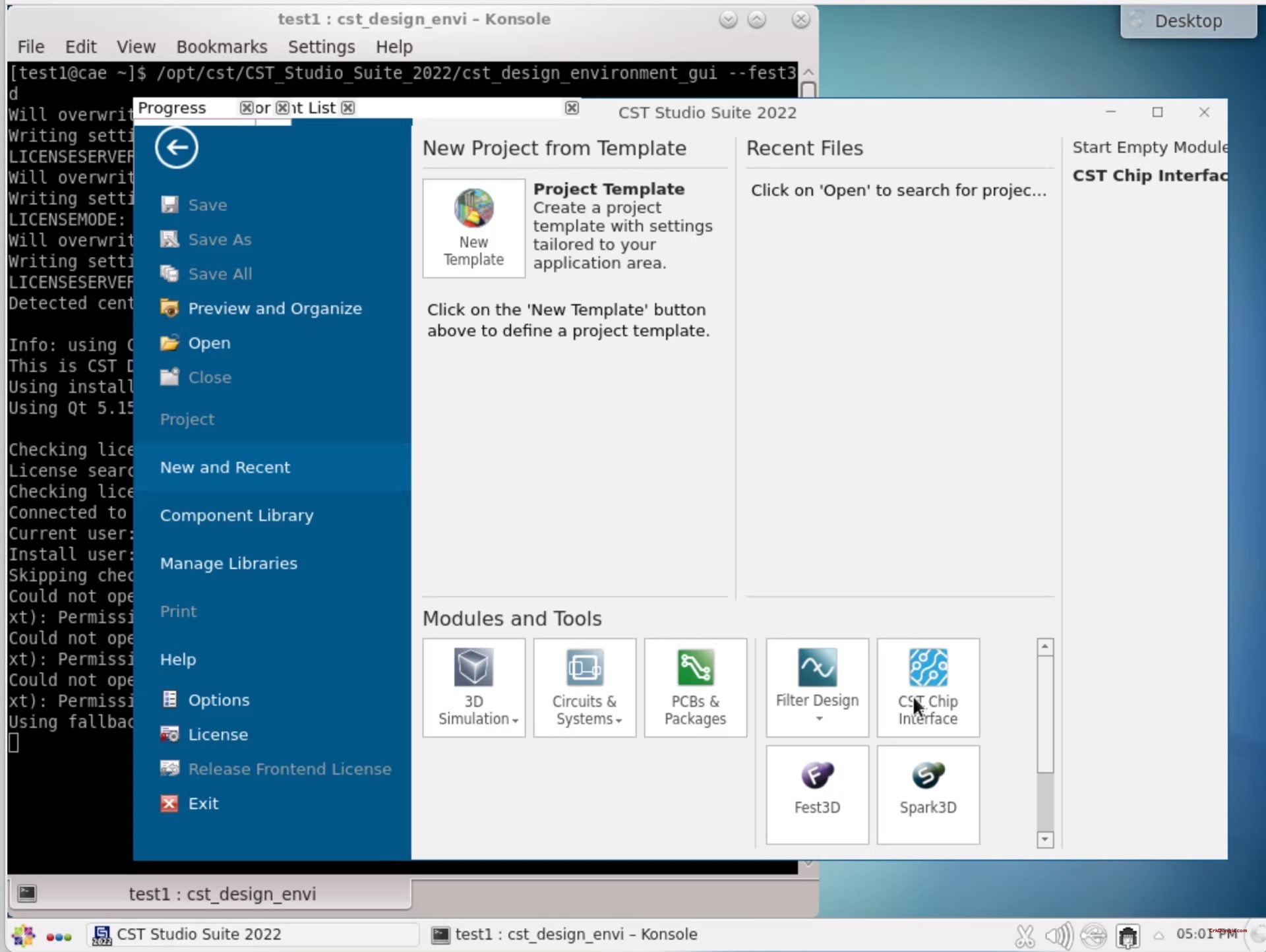
CST Studio Suite 2025 for Linux: High-Performance EM Simulation on Open Systems CST Studio Suite 2025 for Linux is the Linux-native version of the premier integrated platform for 3D electromagnetic (EM) simulation and multi-physics analysis. It provides engineers and researchers with a full suite of solvers and tools to design, analyze, and optimize electromagnetic devices—from antennas, filters, and on-chip components to entire systems—leveraging the stability and computing power of Linux-based workstations and high-performance computing (HPC) clusters. Core Function: A Unified Workflow for Complex EM Challenges on Linux The suite’s primary strength is its unified environment that integrates multiple specialized solvers (eigenmode, transient, frequency domain) within a single interface. This allows users to choose the best numerical method for their specific...
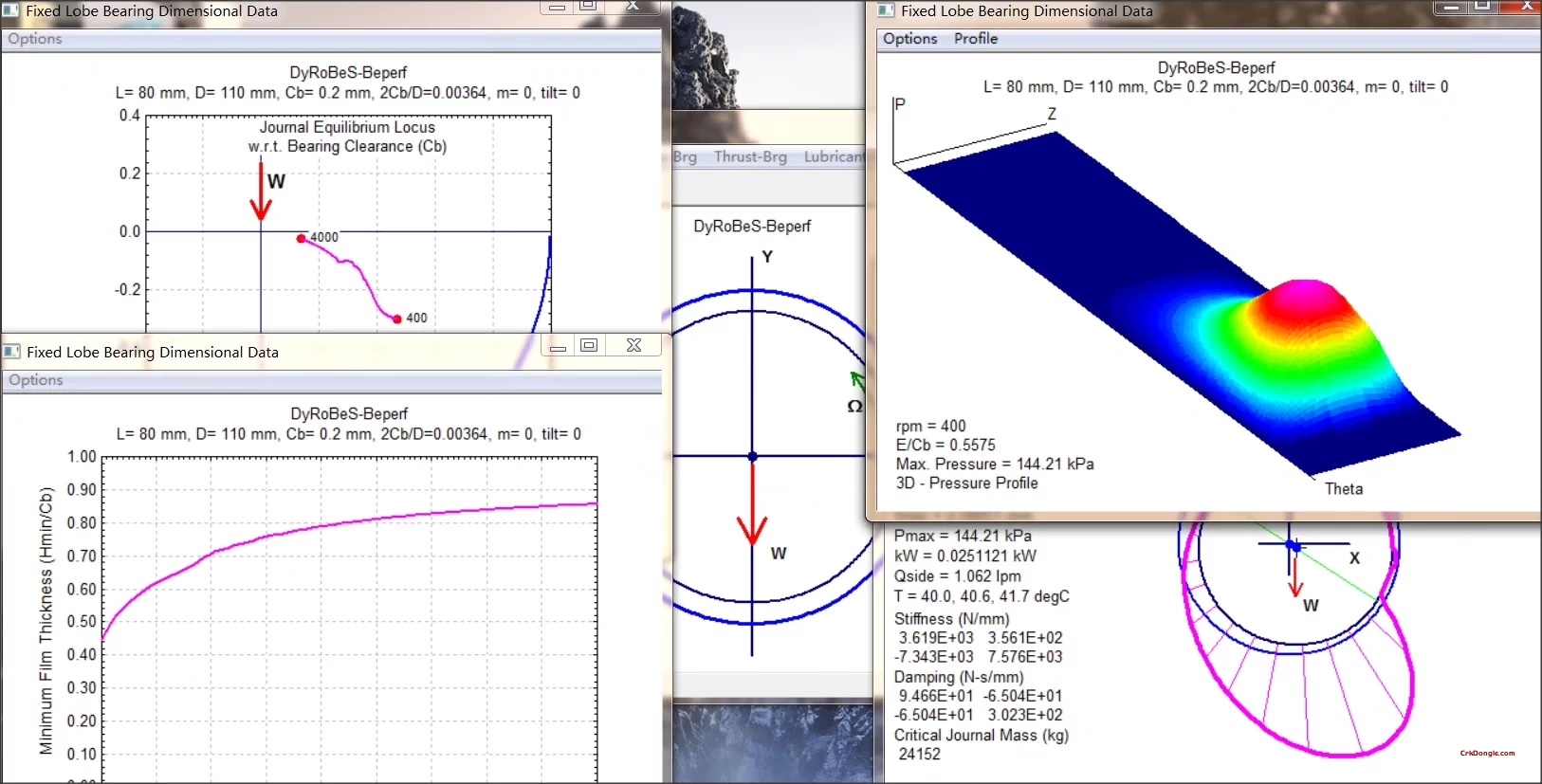
DyRoBeS 22: The Comprehensive Platform for Rotating Machinery Analysis DyRoBeS 22 (Dynamics of Rotor Bearing Systems) is a professional, dedicated software suite for the analysis and design of rotating machinery. It provides specialized tools for solving complex rotor dynamics problems, enabling engineers to predict critical speeds, instability thresholds, bearing performance, and torsional vibrations in systems such as turbines, compressors, pumps, motors, and gearboxes. This analysis is essential for ensuring reliable, stable, and long-lasting operation of high-speed machinery. Core Function: Ensuring Rotor System Stability & Reliability The software’s primary function is to model the complete rotor-bearing-foundation system and solve the equations of motion to understand its dynamic behavior. It helps answer critical design questions: “At what speeds will the rotor become...
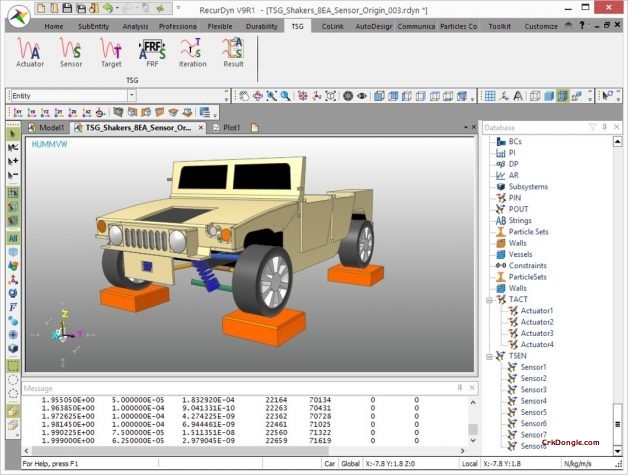
RecurDyn 2025: The High-Fidelity Platform for Complex Mechanical System Simulation RecurDyn 2025 is a powerful, integrated Computer-Aided Engineering (CAE) software specializing in multibody dynamics (MBD), with a strong emphasis on accurately modeling systems involving large deformations, complex contact conditions, and combined rigid/flexible bodies. It enables engineers to simulate the realistic motion, loads, and stresses of intricate mechanical systems—such as vehicle suspensions, track systems, robotics, and industrial machinery—throughout their entire operational range, providing critical data for performance, durability, and noise/vibration analysis. Core Function: Predicting Realistic System-Level Behavior RecurDyn’s core strength lies in its robust solver and modeling capabilities for handling nonlinear dynamics. It excels at simulating scenarios where components undergo significant deformation, make and break contact frequently, or interact through complex...
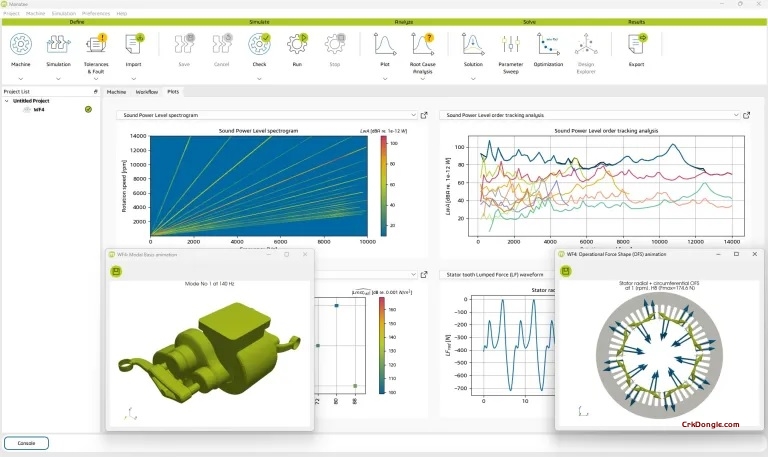
Manatee offers a collaborative simulation and analysis environment designed to quickly and accurately optimize the vibroacoustic performance of electric machines and drives under electromagnetic excitations. Its user-friendly interface has been developed for control, electrical, mechanical and NVH engineers. Designing high-quality electric machines requires controlling their acoustic noise and vibration levels at every development stage, from risk analysis in preliminary studies to vibroacoustic troubleshooting after prototype manufacturing. Electric machines can induce significant electromagnetic noise and vibration (e-NVH) due to Maxwell force excitations, resulting in sound levels going up to 125 dBA at 1 meter. All topologies of electric machines can produce health, comfort, environmental friendliness or mechanical fatigue. Electrical, magnetic and mechanical early design choices can have up to ±20 dB...
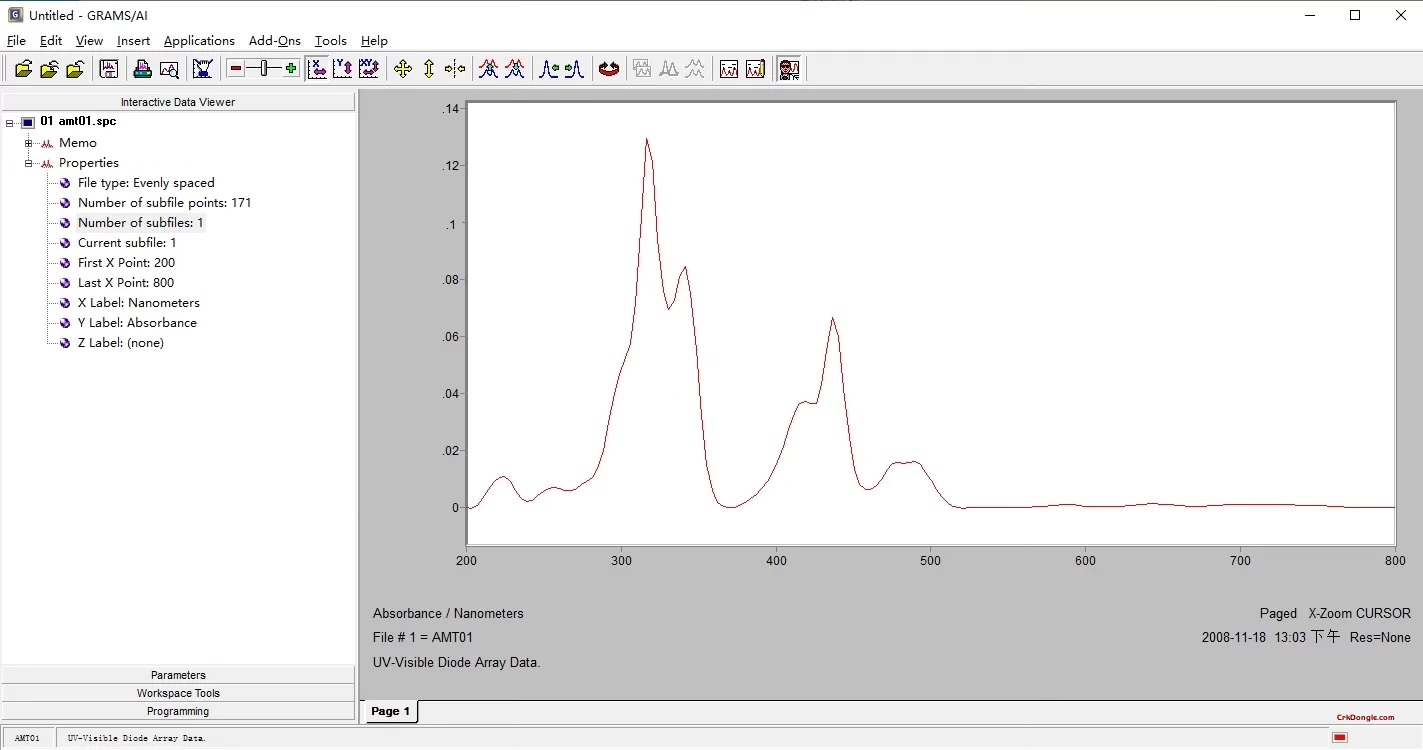
GRAMS Suite 9.2: The Integrated Platform for Spectral Intelligence GRAMS Suite 9.2 is a powerful, all-in-one software package for the processing, analysis, visualization, and management of data from a wide variety of analytical instruments, most notably spectrometers (IR, Raman, UV-Vis, NMR) and chromatographs. It serves as a central hub for scientists and analysts in pharmaceuticals, chemicals, forensics, and academia to transform raw spectral data into meaningful chemical information and actionable results. Core Function: From Raw Spectrum to Chemical Insight The software’s primary role is to provide a comprehensive set of tools to import, clean, manipulate, and interpret complex spectral and chromatographic data. It supports the entire workflow from baseline correction and peak picking to advanced multivariate analysis and database searching....
AutoTURN 2025: The Essential Tool for Vehicle Swept Path Analysis AutoTURN 2025 is the definitive software for analyzing and simulating the turning movements of vehicles in transportation and site design projects. As a standalone application and plugin for AutoCAD, MicroStation, and BricsCAD, it enables civil engineers, transport planners, and architects to ensure that roadways, intersections, loading docks, and parking facilities can safely and efficiently accommodate a wide range of vehicle types—from passenger cars to large emergency vehicles, buses, and articulated trucks. Core Function: Simulating Real-World Vehicle Maneuvers The software’s primary function is to calculate and graphically display the precise swept path (the envelope created by all points on the vehicle during a turn) and clearance envelope for a user-defined vehicle...
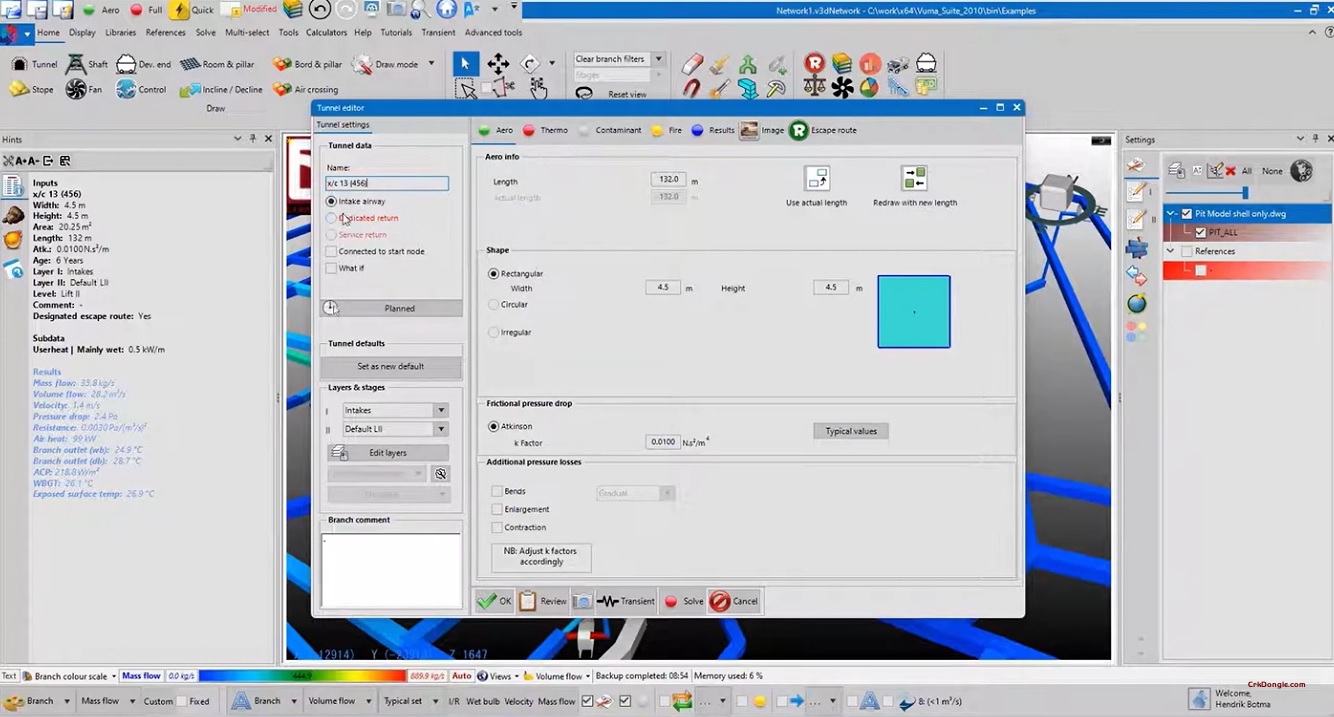
VUMA Network VUMA3D 2024: The Advanced Simulator for Underground Mine Airflow VUMA Network VUMA3D 2024 is a comprehensive, specialized software suite for the simulation, analysis, and optimization of underground mine ventilation and climatic conditions. It is an essential tool for mine ventilation officers, planning engineers, and consultants to design safe, efficient, and environmentally controlled underground workings by modeling complex 3D ventilation networks, tracking contaminants (dust, gases, heat), and ensuring compliance with health and safety regulations. Core Function: Predicting and Managing the Mine Atmosphere The software’s primary function is to solve the mathematical network formed by all airways (shafts, drifts, raises) and ventilation controls (fans, regulators, stoppings) in a mine. It calculates airflow distribution, pressures, and the propagation of heat and...
CONVERGE Studio 5.1.0 for Linux: The Graphical Interface for Autonomous CFD CONVERGE Studio 5.1.0 for Linux is the dedicated graphical user interface (GUI) companion software for CONVERGE CFD, a leading computational fluid dynamics solver known for its fully automated, cut-cell Cartesian meshing. This Linux-native version of Studio provides engineers and analysts with an intuitive environment to prepare simulation cases, submit jobs to compute clusters (including those running Linux), and visualize complex 3D results, all without needing to write manual scripts or edit text files for the core solver. Core Function: Streamlining the CONVERGE CFD Workflow on Linux The primary role of CONVERGE Studio is to manage the complete simulation workflow for the CONVERGE solver on Linux systems. It acts as...
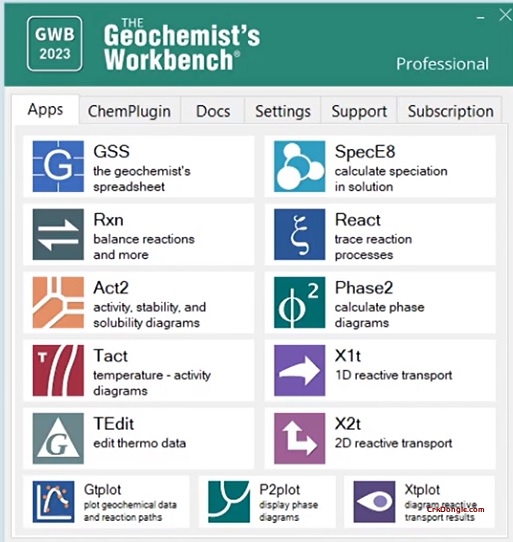
Geochemist’s Workbench 2025: The Integrated Platform for Geochemical Modeling Geochemist’s Workbench 2025 is a comprehensive software package for modeling a wide range of geochemical processes in aqueous systems. It is used by geochemists, hydrogeologists, and environmental scientists to predict water-rock interactions, calculate mineral solubility, trace reaction paths, and model the fate of contaminants in groundwater. The software combines a powerful thermodynamic database with flexible simulation tools to solve complex geochemical problems from fundamental research to applied environmental site investigation. Core Function: Predictive Modeling of Fluid-Mineral Systems The software’s core is its ability to perform equilibrium and kinetic reaction calculations. Users define a chemical system (a water composition and minerals in contact), and GWB calculates the speciation of the fluid, the...
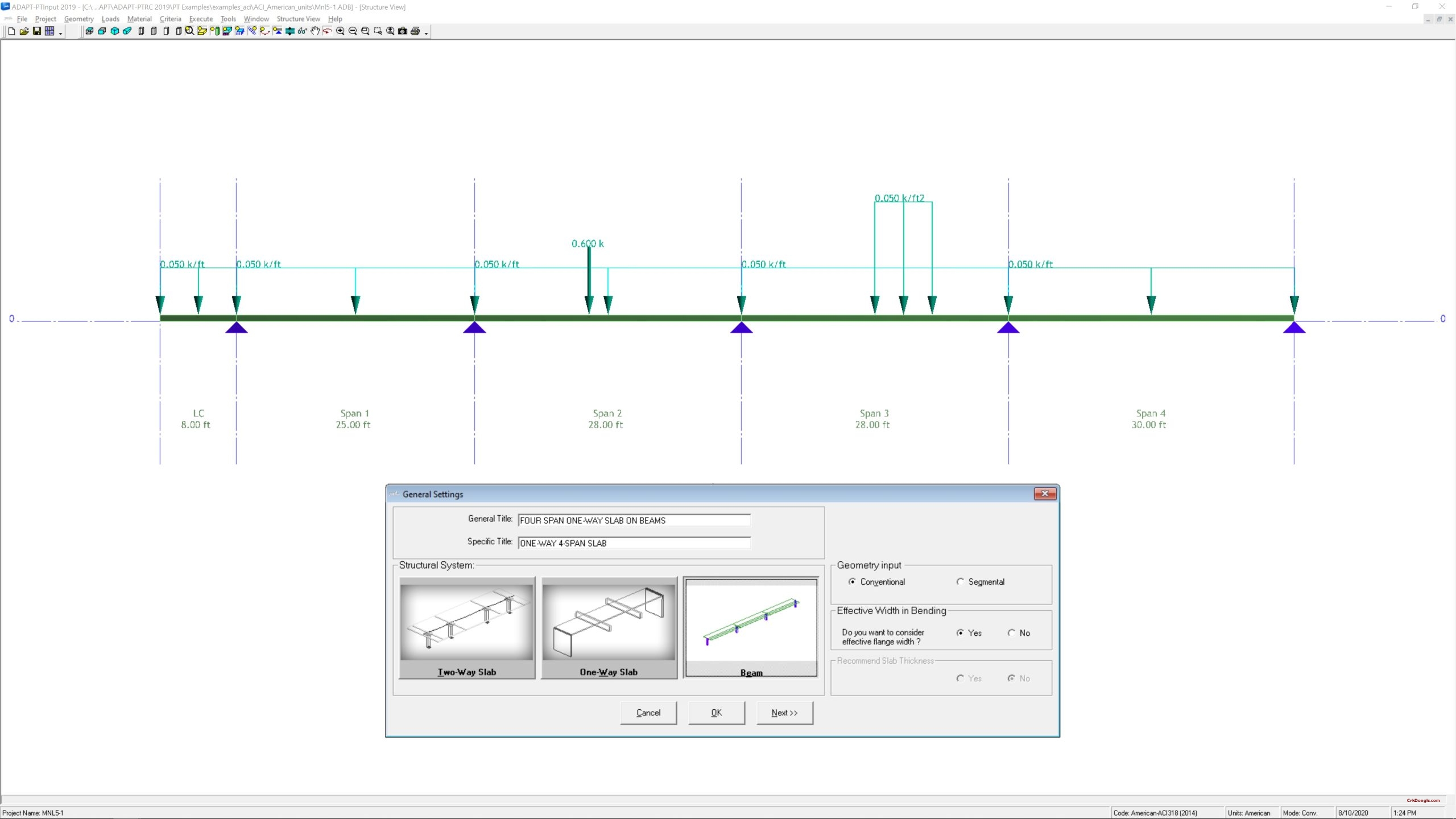
ADAPT PT/RC 23: The Expert System for Post-Tensioned & Reinforced Concrete Design ADAPT PT/RC 23 is a sophisticated, industry-specialized software for the analysis and design of post-tensioned (PT) and reinforced concrete floor systems, beams, and foundations. It is the preferred tool for structural engineers designing commercial buildings, parking structures, and residential towers where the efficiency and serviceability advantages of post-tensioning are critical. The software provides an integrated environment to model, analyze, design, and detail concrete structures according to ACI 318 and other international building codes. Core Function: Integrated Workflow for Concrete Floor Systems The software’s primary strength is its ability to handle the unique complexities of post-tensioned design—such as calculating time-dependent losses (elastic shortening, creep, shrinkage, relaxation), balancing loads, and...
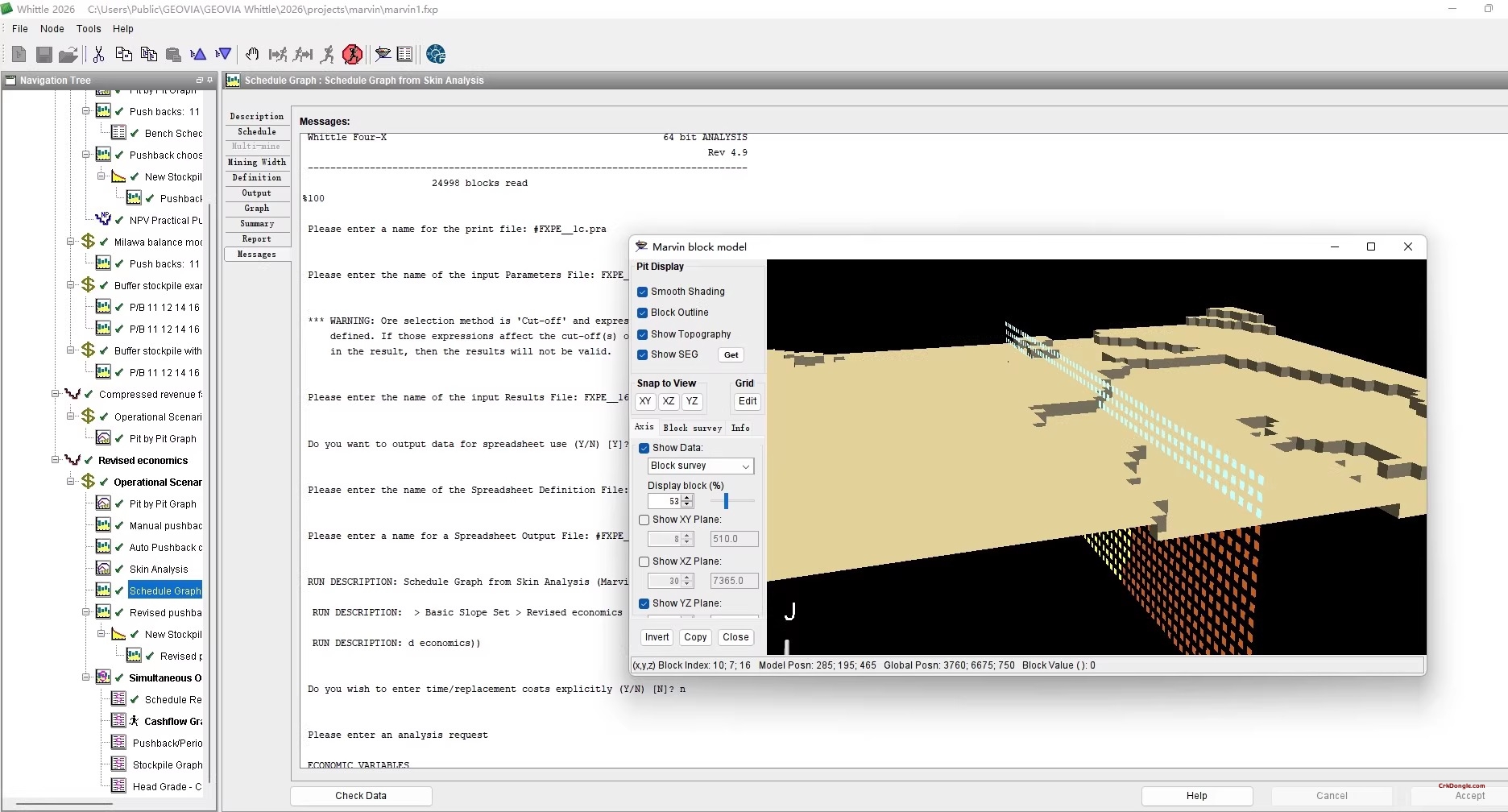
GEOVIA Whittle 2026: The Strategic Engine for Open Pit Mine Valuation GEOVIA Whittle 2026 is the world’s leading software for strategic open pit mine planning and optimization. It is used by mining companies, consultants, and financial institutions to determine the most profitable ultimate pit limit and to design optimal phase (pushback) sequences. By applying the renowned Lerchs-Grossmann algorithm and other optimization techniques to a block model, Whittle answers the fundamental business question: “What is the most valuable way to excavate this ore body?” Core Function: Maximizing Project Value Through Mathematical Optimization The software’s primary function is to transform a geological block model (with assigned costs, revenues, and densities) into a strategic mining plan that maximizes the project’s Net Present Value...
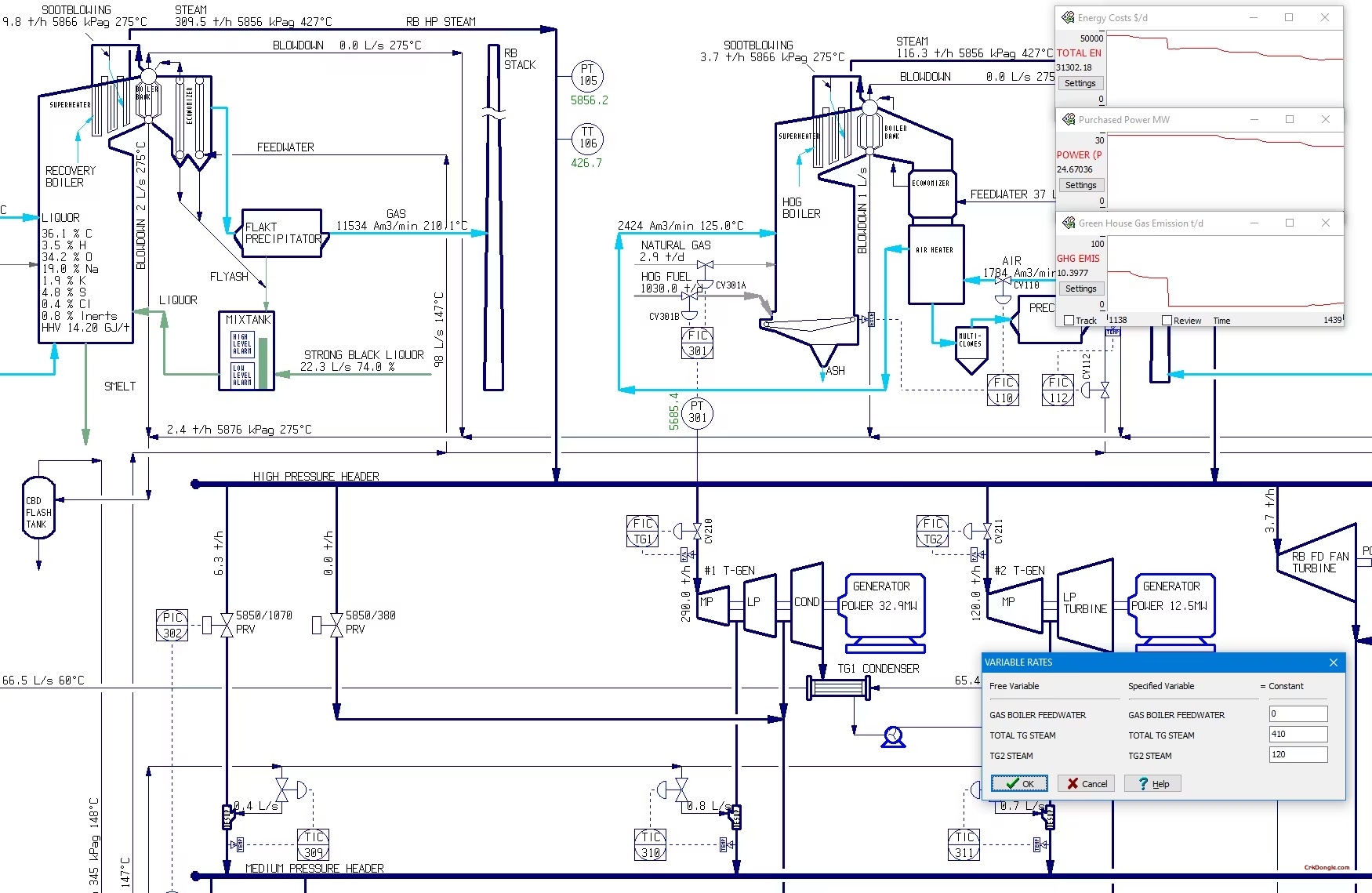
Aurel Systems CADSIM Plus v3.4.15: The Dynamic Simulator for Process Safety & Training Aurel Systems CADSIM Plus v3.4.15 is a comprehensive software platform for dynamic process simulation used to design, analyze, and test industrial processes, with a strong focus on creating high-fidelity Operator Training Simulators (OTS). It enables process engineers and plant managers to build accurate digital twins of chemical plants, refineries, and other continuous processes to train operators, test control strategies, and investigate process upsets in a safe, virtual environment. Core Function: Real-Time Dynamic Simulation of Industrial Plants The software’s primary function is to perform rigorous, first-principles dynamic simulation. It solves mass, energy, and component balance equations in real-time to model how a process responds to changes—such as startup,...
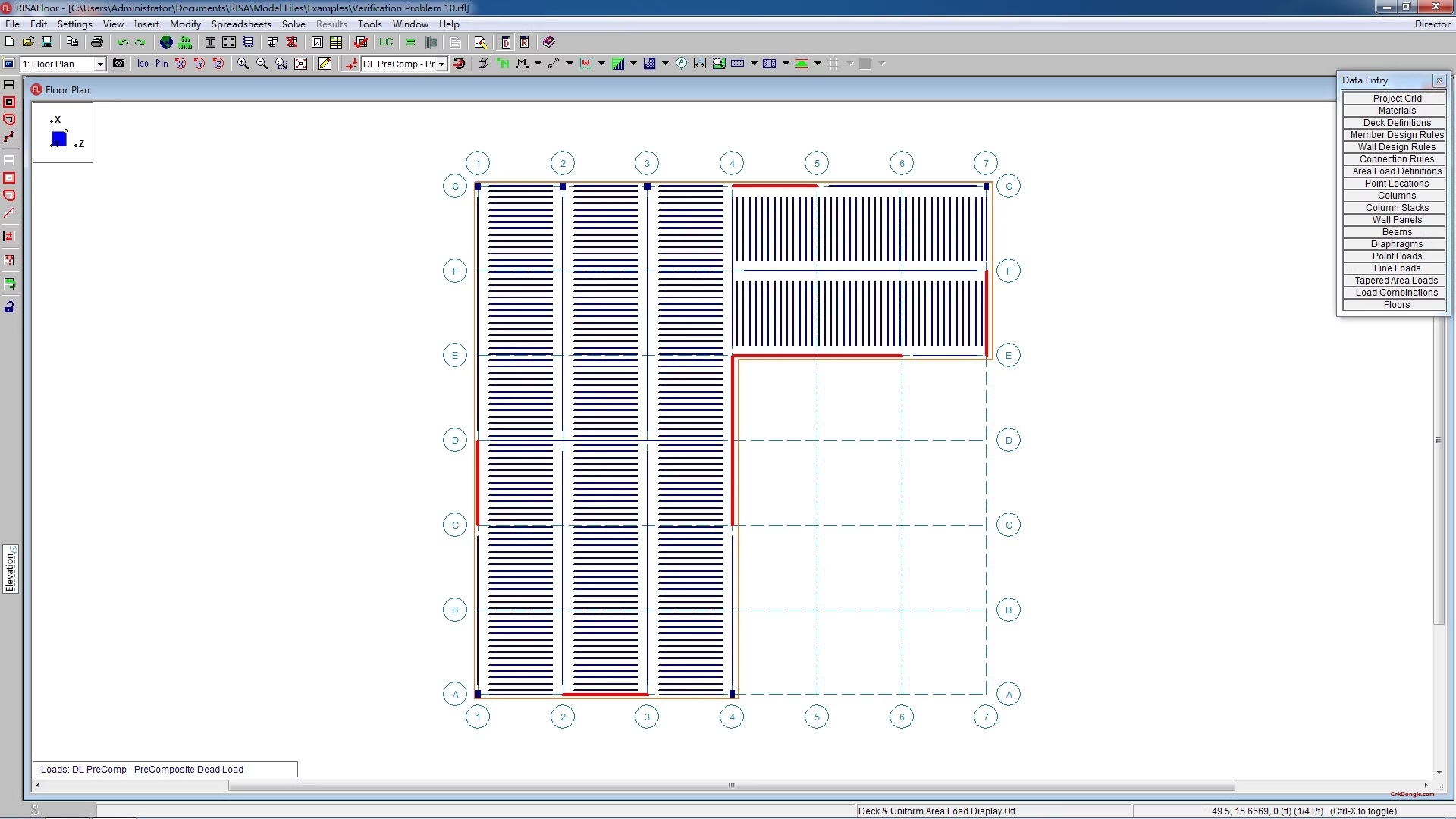
RISAFloor 12.0.5: The Integrated Solution for Floor System & Foundation Design RISAFloor 12.0.5 is a specialized structural engineering software application within the RISA suite, focused on the design of floor systems and foundations for buildings. It works seamlessly with RISA-3D to provide an efficient workflow where the gravity load-carrying system (floors, beams, columns, footings) can be modeled, analyzed, and designed independently or as part of a complete 3D building model, ensuring accuracy in load tracking and distribution. Core Function: Efficient Gravity System Design & Load Path Tracking The software’s primary function is to model the floor system (typically composite steel beams and metal deck or concrete slabs) to accurately calculate load distributions to supporting beams, columns, and ultimately, foundations. It...