11 Articles
Tags :research-software

ANY-maze 7.61 | Professional Animal Behavior Tracking & Analysis Software ANY-maze 7.61 is a maintenance release of the widely-used video tracking system for automated behavioral analysis in neuroscience, pharmacology, and psychology research . It provides researchers with powerful tools for objective, quantitative data collection from diverse experimental paradigms. Core Functionality Overview: Automated Multi-Animal & Multi-Zone Tracking: Accurately tracks multiple animals simultaneously in complex arenas (mazes, open fields, social chambers) using advanced video analysis with support for whole-animal, nose-point, and three-point tracking . Comprehensive Behavioral Profiling: Automatically calculates parameters including distance traveled, speed, rotation, zone occupancy, immobility/freezing detection, and social interaction metrics . Flexible Experiment Design: Features intuitive test scheduling with stages and trials, real-time data visualization, live warnings, and support...
EndNote 2025 | Reference Management & Citation Software for Research & Writing EndNote 2025 is the latest version of the industry-leading reference management software designed to streamline the research and publication process. It enables researchers, academics, and students to collect, organize, format, and cite references with high efficiency and accuracy. Core Functionality Overview: Comprehensive Reference Library Management: Builds and organizes extensive personal reference libraries with full-text PDF support, annotation tools, and smart search capabilities across online databases. Automated Citation & Bibliography Formatting: Seamlessly inserts citations into Microsoft Word and Google Docs, automatically generating bibliographies in thousands of predefined journal and style formats (APA, MLA, Chicago, etc.). Collaboration & Teamwork Tools: Facilitates sharing of reference libraries and documents with colleagues, enabling...
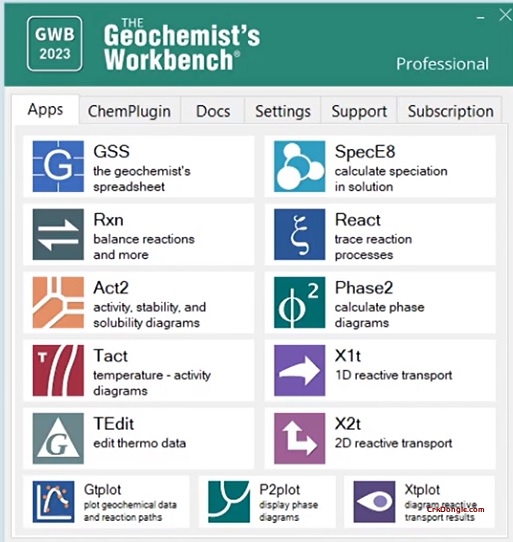
Geochemist’s Workbench 2025: The Integrated Platform for Geochemical Modeling Geochemist’s Workbench 2025 is a comprehensive software package for modeling a wide range of geochemical processes in aqueous systems. It is used by geochemists, hydrogeologists, and environmental scientists to predict water-rock interactions, calculate mineral solubility, trace reaction paths, and model the fate of contaminants in groundwater. The software combines a powerful thermodynamic database with flexible simulation tools to solve complex geochemical problems from fundamental research to applied environmental site investigation. Core Function: Predictive Modeling of Fluid-Mineral Systems The software’s core is its ability to perform equilibrium and kinetic reaction calculations. Users define a chemical system (a water composition and minerals in contact), and GWB calculates the speciation of the fluid, the...
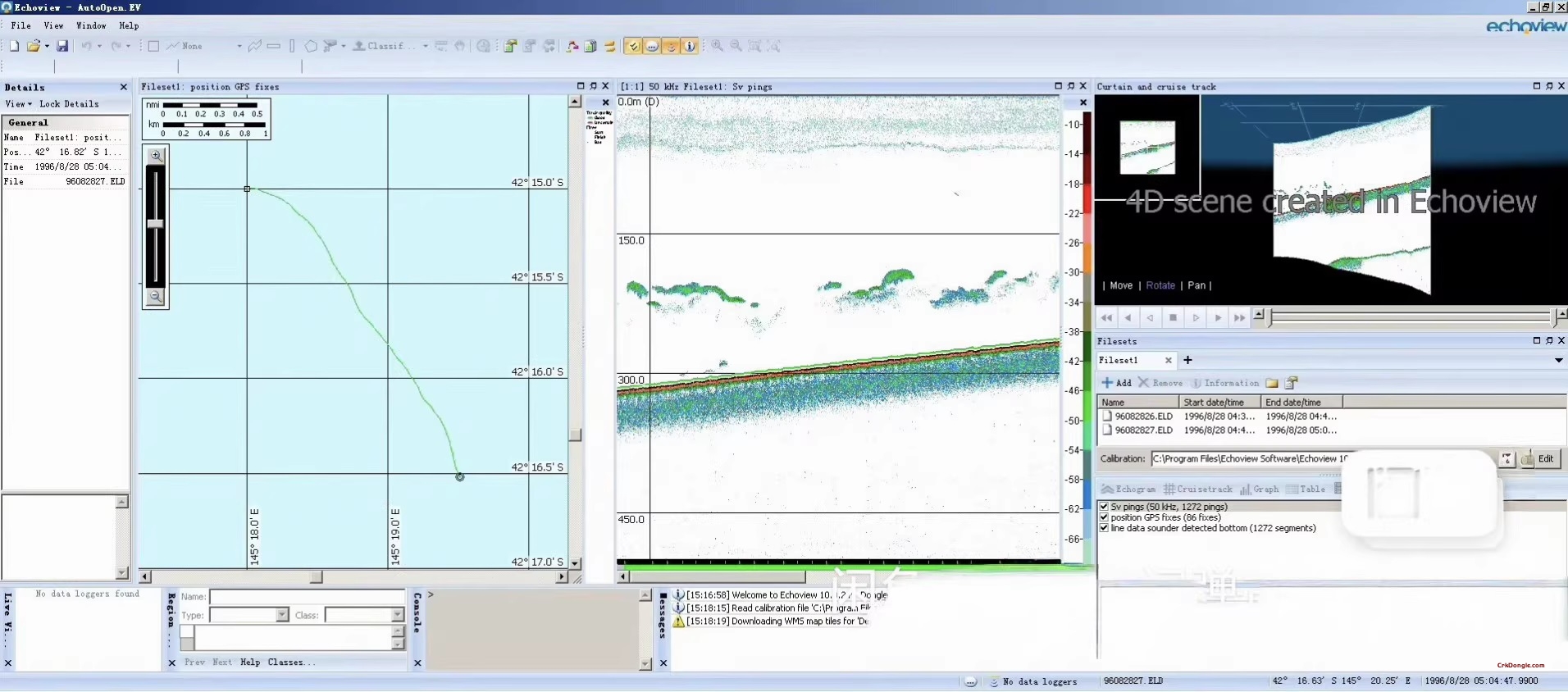
Echoview 16: The Standard for Hydroacoustic Data Analysis Echoview 16 is the world’s leading specialized software for processing, visualizing, and analyzing data from underwater acoustic instruments, such as scientific echosounders (singlebeam and multibeam) and sonars. It is an essential tool for fisheries scientists, marine ecologists, and oceanographers who use sound to study aquatic life (fish, zooplankton), map the seafloor, and characterize the water column. Core Function: Transforming Acoustic Signals into Ecological & Spatial Data The software’s primary role is to convert raw acoustic backscatter data (echoes) into quantitative biological and geophysical information. It applies sophisticated algorithms to filter noise, classify echoes, and extract metrics like fish biomass, school dimensions, plankton distribution, and seabed topography. Key Functions: Data Import & Calibration:...
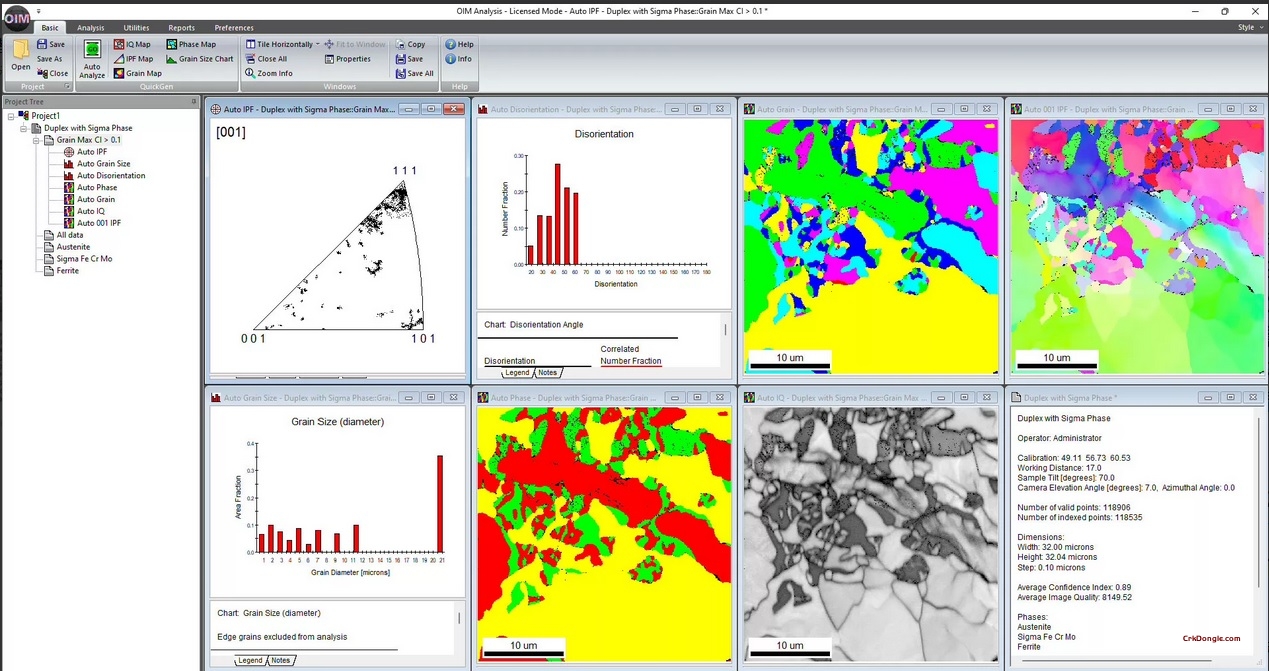
EDAX OIM Analysis 9.1: The Essential Software for EBSD Data Interpretation EDAX OIM Analysis 9.1 (Orientation Imaging Microscopy) is the dedicated analysis suite for processing, visualizing, and quantifying data acquired from Electron Backscatter Diffraction (EBSD) systems, primarily from EDAX/AMETEK. It is the critical software for materials scientists and metallurgists to transform raw diffraction patterns into comprehensive, quantitative maps of a material’s crystallographic microstructure. Core Function: From Diffraction Patterns to Crystallographic Maps The software’s primary role is to index the Kikuchi diffraction patterns captured by the EBSD detector at each point on a sample scan. It calculates the crystal orientation and phase at each point, compiling this data into detailed maps that reveal grain structure, texture (preferred orientation), and phase distribution....
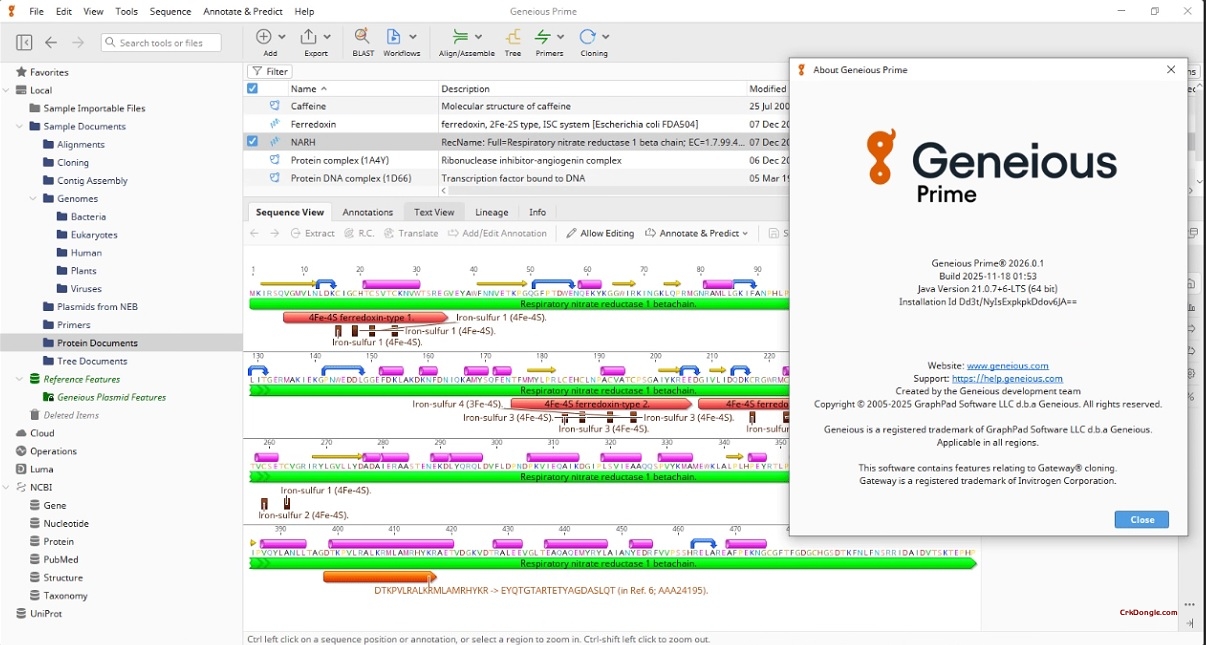
Geneious Prime 2026: The Integrated Bioinformatics Workbench Geneious Prime 2026 is a comprehensive, user-friendly desktop software platform designed for bioinformatics and molecular biology research. It consolidates a vast array of analysis tools into a single, intuitive interface, enabling biologists, geneticists, and bioinformaticians to manage, analyze, and visualize biological sequence data (DNA, RNA, protein) without needing to use multiple command-line tools or disparate programs. Core Function: Centralized Platform for Sequence Analysis Its primary function is to serve as a unified workbench where users can import data from various sources (sequencers, public databases), perform a wide range of analyses through a graphical interface, and generate publication-ready visualizations and reports, all within one project environment. Key Functions: Sequence Assembly & Mapping: Assembles reads...
Lhasa Nexus 2.7: The In Silico Platform for Chemical Safety Assessment Lhasa Nexus 2.7 is a specialized software suite for predictive toxicology and metabolism, primarily used in pharmaceutical development, chemical safety, and regulatory science. It applies expert knowledge and computational models to predict the potential toxicity and metabolic fate of chemical compounds, helping researchers prioritize experiments, mitigate risks, and support regulatory submissions. Core Function: Virtual Screening for Chemical Hazards The software’s primary function is to provide early, computer-based (“in silico”) assessments of a molecule’s safety profile. It helps answer critical questions: “Could this compound be mutagenic, carcinogenic, or toxic?” and “How will the body metabolize it?” before costly laboratory or clinical testing begins. Key Functions: Toxicity Prediction: Utilizes well-established methodologies...
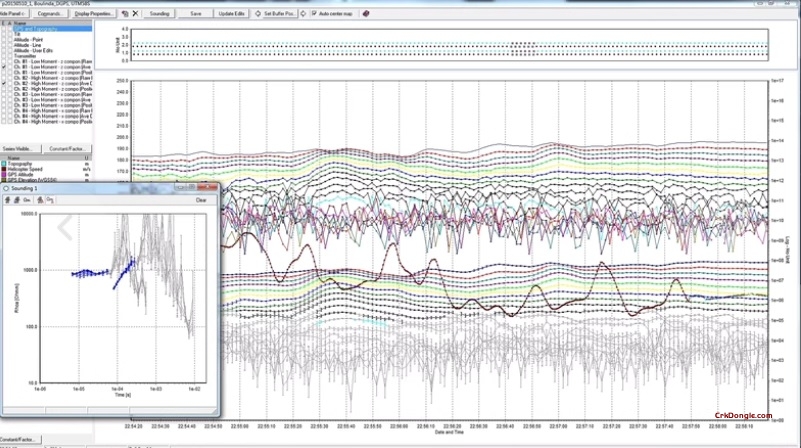
Aarhus Workbench v2025.1: The Integrated Platform for Geophysical Inversion Aarhus Workbench v2025.1 is a specialized software package for processing, modeling, and inverting geophysical data, with a strong focus on Transient Electromagnetic (TEM) methods, Spectral Induced Polarization (SIP), and seismic data. Developed by Aarhus GeoSoftware, it is a key tool for hydrogeologists, environmental consultants, and exploration geophysicists to create accurate 1D, 2D, and 3D subsurface models from field measurements. Core Function: Transforming Data into Subsurface Models Its primary function is to take raw or pre-processed geophysical field data and use advanced inversion algorithms to generate quantitative models of subsurface physical properties, such as electrical resistivity, which can be related to geology, groundwater, or mineral resources. Key Functions: Multi-Method Data Inversion: Specializes...
Plexon Offline Sorter v4.7.1: The Neural Spike Sorting Standard Plexon Offline Sorter v4.7.1 is a specialized, industry-standard software designed for the detection, sorting, and classification of neuronal action potentials (“spikes”) from extracellular electrophysiology recordings. It is a critical tool for neuroscientists and researchers working with data from multi-electrode arrays, tetrodes, or single electrodes, enabling the isolation of individual neuron activity from complex neural signals for advanced brain function analysis. Core Function: Isolating Single-Neuron Activity The software processes raw voltage waveforms to separate overlapping spikes from different neurons recorded on the same channel, transforming a noisy signal into clean, classified single-unit and multi-unit activity datasets. Key Functions: Spike Detection & Feature Extraction: Automatically identifies spike events and extracts key waveform features...
Chemcraft 2025: Essential Visualization for Computational Chemistry Chemcraft 2025 is a specialized graphical software designed for visualizing and analyzing the results of computational quantum chemistry calculations. It serves as a critical interface for researchers, turning complex numerical output from programs like Gaussian, ORCA, CFOUR, and Molpro into intuitive, interactive 3D models and plots. Core Function: From Data to Visual Insight Its primary role is to import standard calculation output files and visually represent molecular geometries, vibrational modes, molecular orbitals, and electronic spectra, making abstract quantum mechanical data tangible and analyzable. Key Functions: 3D Molecular Visualization: Build, display, and manipulate high-quality 3D models of molecules and complex systems. Orbital & Surface Analysis: Visualize molecular orbitals, electron density, electrostatic potential maps, and...
MICRESS 7.1: The Gold Standard in Predictive Microstructure Simulation MICRESS 7.1 (Microstructure Evolution Simulation Software) is the world’s premier, commercially supported phase-field simulation software dedicated to predicting the complex evolution of material microstructures. It provides materials scientists, metallurgists, and research engineers with a powerful computational tool to virtually “grow” and observe microstructures under defined thermal and chemical conditions. By solving the coupled partial differential equations for phase transformation, diffusion, and interface motion, MICRESS offers unprecedented insight into processes like solidification, solid-state phase transformations, grain growth, and precipitation—bridging the gap between atomic-scale mechanisms and macroscopic material properties. Core Philosophy: From Processing to Properties via Virtual Microstructures The core value of MICRESS lies in its ability to predict the final microstructure (grain...