Simulation
engineering simulation software for structural, fluid, heat transfer, and multiphysics problems. ACSL and acslX – an advanced continuous simulation …

RSoft Photonic Device Tools 2026 officially supports Red Hat Linux 7.3, and while Keysight cannot guarantee support for all Linux distributions, the software can typically be configured to run on most modern 64-bit Linux distributions . The suite is also available for Linux through academic distribution channels like CMC Microsystems . 🚀 Key Features in RSoft 2026 (Linux-Compatible) The 2026 release focuses on inverse design, GPU acceleration, and system-level integration, all of which are available on the Linux platform . Topology Optimizer (Inverse Design): A new free-form inverse design tool built into the RSoftCAD environment. It automatically generates optimal material layouts or geometries based on user-defined performance targets using the adjoint method, eliminating the need for predefined structures . GPU-Accelerated...
Emerson PipelineStudio 5.6: Pipeline Simulation & Modeling Software Emerson PipelineStudio 5.4 is a significant update to the pipeline simulation software, introducing new fluid support, the GERG 2008 equation of state, and simulation stability improvements for the energy transition era. Key New Features in Version 5.6 Based on Emerson’s official release notice, the main enhancements in this version are: GERG 2008 Equation of State: Introduces the much-requested native implementation of the GERG 2008 EOS. This allows users to determine product blends at mixing nodes and recompute hydraulic variables with a fully-featured model. Energy Transition Fluids: Adds new fluid tables for Ammonia and Hydrogen, along with a new anthropogenic carbon dioxide viscosity correlation to support emerging energy projects. “Load and Lock” Starting...
Abaqus 2026 on Linux introduces major performance advancements, particularly through native GPU acceleration for the Abaqus/Explicit solver. This capability is a key feature for high-performance computing (HPC) environments. Here is an overview of the key new features, system requirements, and how to get started. 🚀 Key New Features in Abaqus 2026 for Linux GPU Acceleration in Abaqus/Explicit The most significant update is the native GPU acceleration for the Abaqus/Explicit solver, available as part of the R2026x FD01 release. This makes Abaqus one of the first major commercial explicit FEA codes to leverage GPU computing natively. The feature is designed for Linux systems with NVIDIA GPUs and supports both dynamic and quasi-static analyses, making it suitable for: Crash simulations Drop tests...
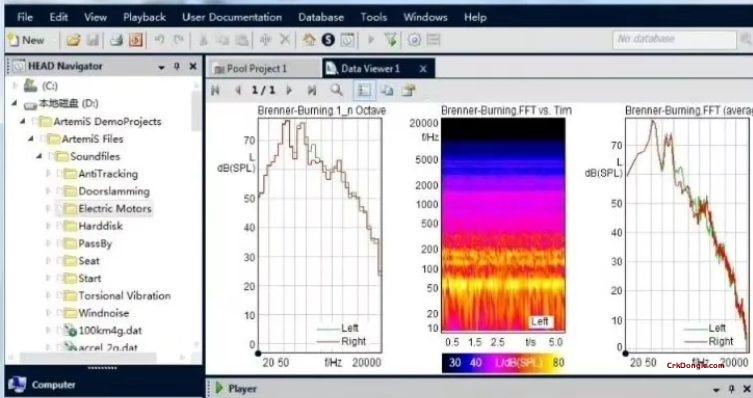
ArtemiS SUITE 18: Sound & Vibration Analysis Platform ArtemiS SUITE 17 is the latest major release of HEAD acoustics’ modular software platform for sound and vibration analysis, used across industries in NVH (Noise, Vibration, and Harshness) analysis for product development, optimization, and troubleshooting. Key New Features in Version 18 Transfer Path Analysis (TPA) Enhancements ArtemiS SUITE 17 introduces two key technologies for greater efficiency and precision in Transfer Path Analysis: Blocked Forces (ISO 20270): Characterizes vibroacoustic sources independently of installation conditions, enabling source description to be applied to almost any target system. ArtemiS SUITE supports the entire process from interactive 3D measurement planning to standard-compliant determination and evaluation using the Interface Completeness Criterium Plus (ICC+). Virtual Point Transformation (VPT) (ASP...
Sigmadyne SigFit 2026: Optomechanical Analysis & Coupling Software SigFit 2026 is Sigmadyne’s optomechanical analysis software for integrating finite element analysis (FEA) predictions with optical design software. The 2026 release includes two versions: 2026R1 and 2026R2 (the latest). Version 2026R2 introduces significant licensing changes and builds on the core optomechanical capabilities of the platform . Key New Features in 2026R2 Licensing Update New License Format: 2026R2 requires a new-format license file and license server software 11.19.9.0 . Transition for R1 Users: Version 2026R1 can run with either the old or new license format. Current customers received new _rev1 license files in June 2026, enabling a smooth transition . Core Modules Module Description Surface Fitting Fits Zernike, Annular Zernike, Aspheric, Forbes, and...
MICRESS 7.3: Microstructure Evolution Simulation Software MICRESS 7.3 is the industry-leading multiphase-field software for simulating microstructure formation in materials, particularly metallurgical systems . Released in November 2024 , this version focuses on workflow automation, expanded scripting capabilities, and performance enhancements for phase-field simulation . Key New Features in Version 7.3 MicPy Python Package A significant new addition is MicPy, an open-source Python package available via PyPI that streamlines MICRESS workflows : Data Access: Efficiently reads tabular files (.TabF) and binary field data (.conc*) Pandas Integration: Converts tabular data to DataFrames for analysis NumPy Support: Imports field data directly into arrays for advanced computation Matplotlib Integration: Built-in visualization of both tabular and field data Open Source: Freely available with comprehensive documentation...
Magna ECS FEMFAT 2026: Fatigue Analysis Software FEMFAT 2026 is the latest version of Magna’s specialized fatigue life prediction software, delivering significant performance improvements and advanced analysis capabilities for evaluating the durability of components and systems under operational loads . Key New Features in FEMFAT 2026 Massive Performance Boosts The 2026 release accelerates fatigue analysis with up to 10x faster workflows through advanced parallelization and spectral algorithms, enabling faster evaluation of complex components and systems . Smarter Weld Analysis Enhanced weld modeling features include superior intersection handling and multi-segment detection with new data formats, providing more precise fatigue life prediction for seam welds and spot welds . Smart Postprocessing & Data Export Stress animations can now be exported directly as...
WAsP Suite 12.10: Wind Resource Assessment Software WAsP Suite 12.1 is the latest major version of the industry-standard PC software for wind resource assessment, siting, and energy yield calculations for wind turbines and wind farms, developed by DTU Wind and Energy Systems . This release introduces an important enhancement to the wind modeling engine. Key New Feature: Geostrophic Wind Shear Model The most significant improvement in version 12.1 is the geostrophic wind shear model, which enhances wind climate prediction accuracy . Capability Description Model Enhancement WAsP now accounts for geostrophic wind shear, improving the prediction of wind conditions, especially for horizontal extrapolation Implementation The model uses automatically filled parameters for shear magnitude and direction from global CFSR reanalysis data Validation...
Novlum uniTank v3.2.11: Laser Scan Analysis for Storage Tanks uniTank v3.2.11 is a software solution from Novlum for the near real-time analysis and reporting of aboveground storage tanks using 3D laser scan data. It is specifically designed to assess compliance with American Petroleum Institute (API) standards 650 and 653. While the search results do not contain detailed release notes specific to version 3.0, they do provide a strong description of the software’s core functionalities based on the 2019 product sheet, which should represent the fundamental capabilities of this version. Key Capabilities Rapid On-site Analysis: The software is designed to process raw scan data into comprehensive analysis reports “in less than an hour”, enabling on-site decision-making. Comprehensive Structural Analysis: It automatically...
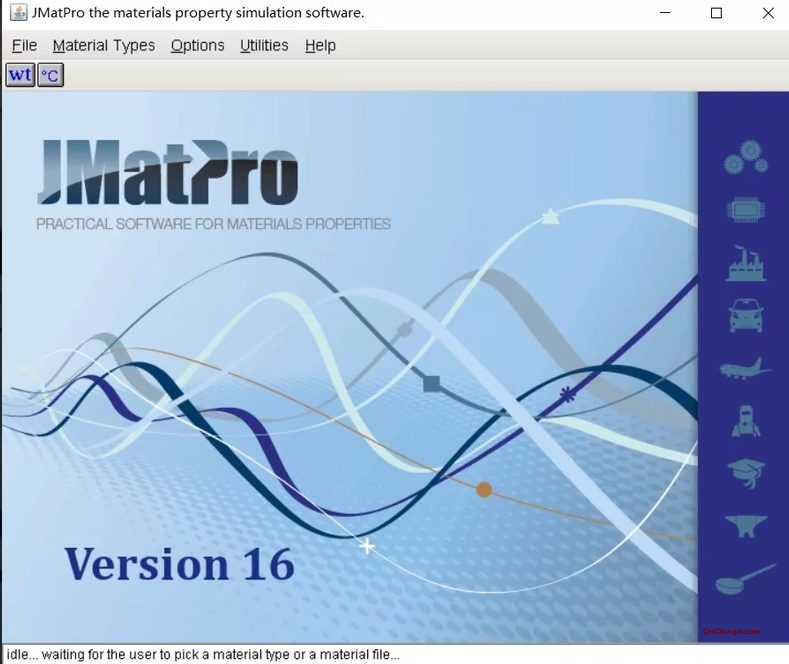
JMatPro 16.0: Metal Alloy Phase Diagram & Property Simulation Software JMatPro 16.0 is the latest version of Sente Software’s industry-leading software for thermodynamic calculation and mechanical property prediction of multi-component metal alloys. Released in January 2026, this version introduces major upgrades across 9 material categories, including user-defined solidification profiles, enhanced precipitation calculations, expanded high-temperature strength modeling, and extended CAE software exports . Key New Features in Version 16.0 Core Calculation Enhancements Category New Feature Description Solidification User-Defined Solidification Profiles Custom cooling curves for back-diffusion model calculations in Al, Mg, Ti, Co, Ni, Zr alloys and General/Stainless Steels General Steels Quenched Microstructure Tempering Tempered Hardness calculation now accepts any quenched microstructure as initial condition Stainless Steels Simultaneous Precipitation New precipitation strengthening...
OptiLayer 2026.7: Optical Thin Film Design & Analysis Software OptiLayer 2026.7 is the latest release of the professional software suite for optical coating design, analysis, and reverse engineering. Powered by the unique needle optimization algorithm, it delivers unmatched speed and capability for solving complex multilayer design problems, from anti-reflection coatings to high-precision filters . Three Core Modules Module Function OptiLayer Main design module for evaluation, optimization, and monitoring. Supports needle, gradual evolution, and refinement algorithms to build designs from scratch or from a single layer . OptiChar Characterizes optical constants (n & k) of film and substrate materials from spectrophotometric or ellipsometric measurements . OptiRE Reverse engineering module for post-production analysis, identifying systematic and random errors in manufactured coatings to...
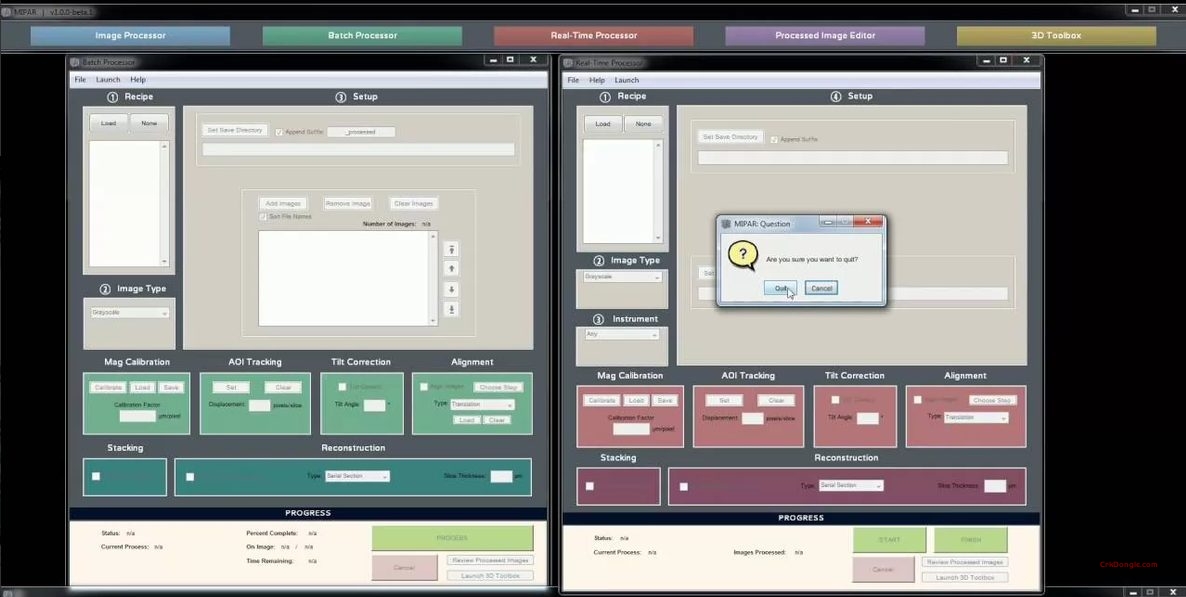
MIPAR Image Analysis 6.0: AI-Powered Scientific Image Analysis MIPAR 6.0 is the latest version of MIPAR’s image analysis platform, a modular software suite that combines traditional image processing with advanced AI for quantitative microscopy and materials science . The v6.0 release introduces major new AI detection architectures—UNet and YOLOX—and a redesigned Batch Processor for automated workflows . Key New Features in v6.0 AI Detection Architectures UNet & YOLOX Support: New AI architectures expand deep learning capabilities for segmentation and object detection, enabling faster and more accurate feature identification across diverse applications . Redesigned Batch Processor Automated Batch Workflows: Complete redesign of the Batch Processor with batchable Color-by-Measure outputs, reports, and quality-of-life improvements to detection visualization . Automated Measurement & Reporting...
pectronaut 21.0 is the Biognosys’ gold-standard software for data-independent acquisition (DIA) proteomics analysis. Trusted by researchers at leading institutions worldwide including Yale University, Max Planck Institute, and Bruker Corporation, it delivers unparalleled throughput and precision for protein identification and quantification across discovery, translational, and clinical research applications. What’s New in Spectronaut 21.0 Advanced ML Scoring & AI Models ~10% more protein groups identified on average across 65 proteomics datasets ~11% more immunopeptides identified across 27 immunopeptidomics datasets Next-generation AI models accurately predict unseen post-translational modifications (PTMs) Improved AI predictions for both tryptic and unspecific peptides Improved Computational Performance Up to 30% faster merging steps when parallelizing 10% faster directDIA for immunopeptidomics (Class I and II) 15% faster directDIA for timsTOF...
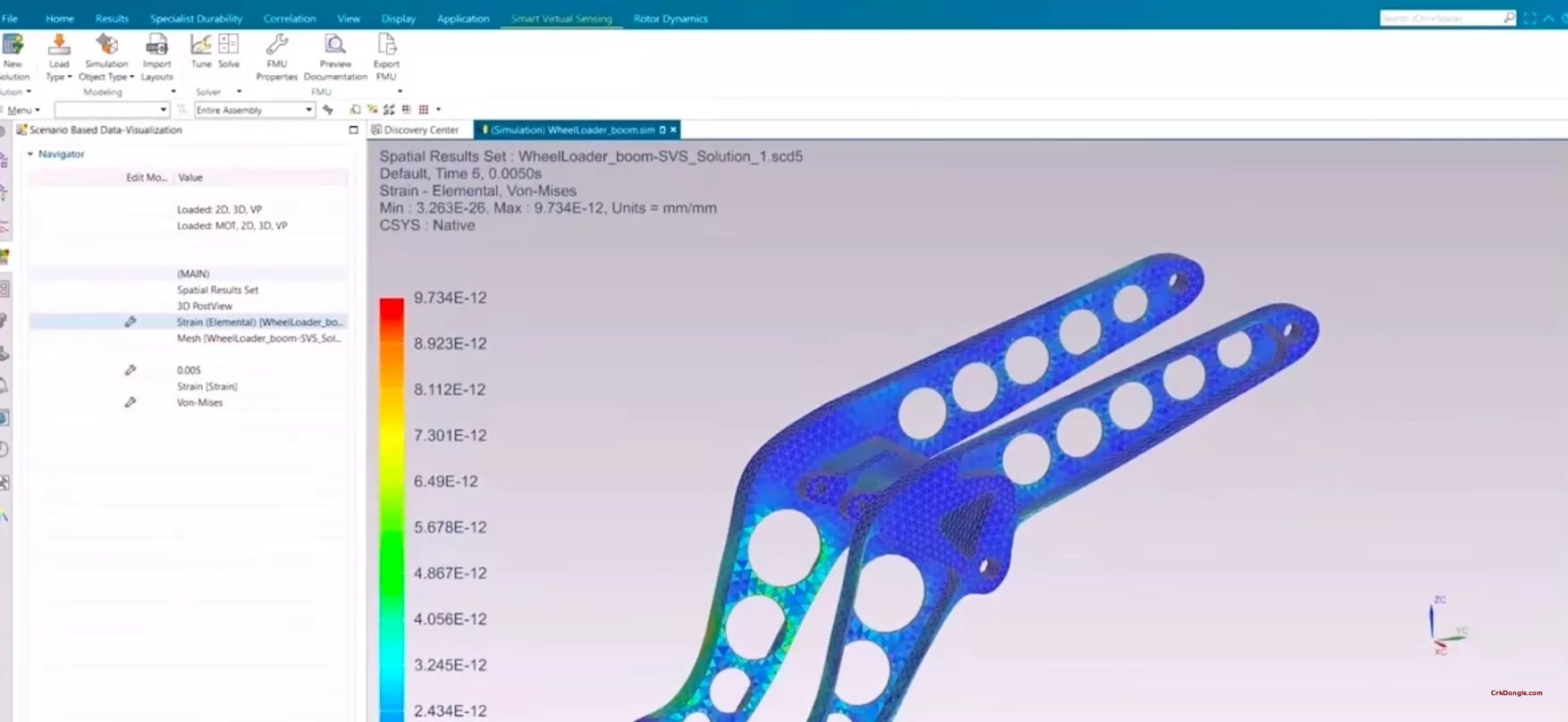
Siemens Simcenter 3D 2512 is the latest release of the unified multidisciplinary simulation platform for mechanical, thermal, electromagnetic, and acoustic analysis. It integrates advanced solvers including Simcenter Nastran, FLOEFD, and Low Frequency EMag with pre/post-processing tools, enabling engineers to model complex physics, explore design spaces, and accelerate product innovation from concept to validation. What’s New in Simcenter 3D 2512 Up to 100x Faster NVH Analysis The new E-Motor Vibration Synthesis (EMVS) acoustics workflow delivers NVH results up to 100 times faster with full FEM accuracy and realistic loads. This dedicated tool creates e-motor reduced-order models for quick iteration on different operating conditions, supporting steady-state ideal current operation and non-skewed IPMSM machines. Active Magnetic Bearings in Rotor Dynamics Model active magnetic...
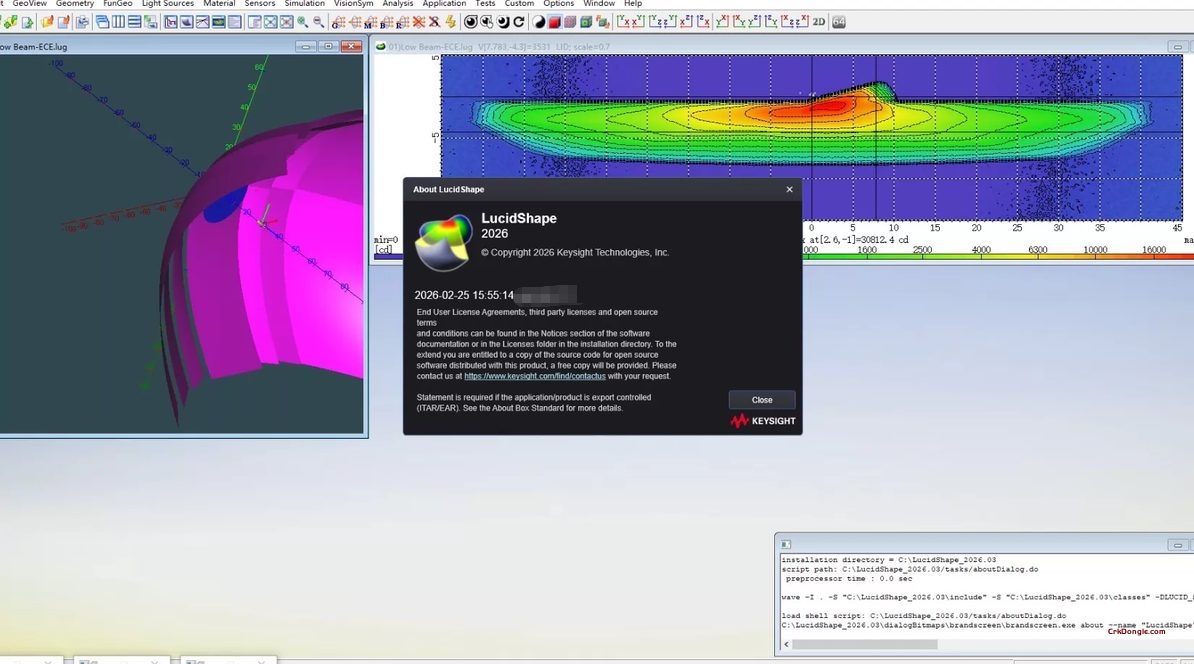
LucidShape 2026 is the latest release of Synopsys’ industry-leading software for computer-aided design, simulation, and analysis of automotive lighting systems. Trusted by automotive OEMs and Tier 1/2 suppliers worldwide, it enables engineers to design, simulate, and validate headlamps, taillights, signal lights, and interior lighting before physical prototyping. What’s New in LucidShape 2026 VisionSym Integration New interoperability with VisionSym allows optical models built in LucidShape to be visualized using GPU-accelerated, photometrically accurate Monte Carlo rendering. This enables combined lit and unlit appearance evaluation for comprehensive design validation. Light Source Apodization Workflow Converts measured ray files into spatial and angular Light Intensity Distribution (LID) data, reducing noise in luminance and near-field analyses while enabling reusable, high-fidelity source models for consistent simulation accuracy....
SIMULIA Abaqus 2026 Free Download Full Version | Nonlinear Finite Element Analysis Software SIMULIA Abaqus 2026 is the latest release of the world’s most trusted nonlinear finite element analysis software. Developed by Dassault Systèmes, it delivers industry-leading capabilities for structural, thermal, multiphysics, and coupled-field simulations across aerospace, automotive, energy, and consumer products industries. What’s New in Abaqus 2026 GPU Acceleration in Abaqus/Explicit Abaqus/Explicit now supports NVIDIA GPU acceleration for dynamic and quasi-static analyses, delivering significant performance improvements for large-scale, compute-intensive models. Benchmarks show highest acceleration for element-dominated models, with moderate gains for contact-heavy crash simulations. Multi-GPU AMG Iterative Solver The multi-GPU AMG iterative solver introduced in 2025 has been further optimized in Abaqus 2026 FD03, delivering substantial performance improvements for...