2 Articles
Tags :computational materials science

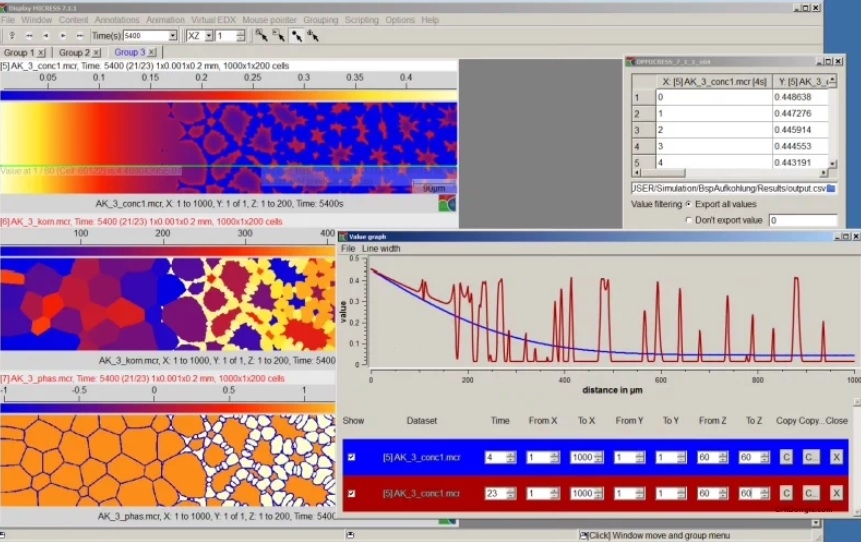
MICRESS 7.3: Microstructure Evolution Simulation Software MICRESS 7.3 is the industry-leading multiphase-field software for simulating microstructure formation in materials, particularly metallurgical systems . Released in November 2024 , this version focuses on workflow automation, expanded scripting capabilities, and performance enhancements for phase-field simulation . Key New Features in Version 7.3 MicPy Python Package A significant new addition is MicPy, an open-source Python package available via PyPI that streamlines MICRESS workflows : Data Access: Efficiently reads tabular files (.TabF) and binary field data (.conc*) Pandas Integration: Converts tabular data to DataFrames for analysis NumPy Support: Imports field data directly into arrays for advanced computation Matplotlib Integration: Built-in visualization of both tabular and field data Open Source: Freely available with comprehensive documentation...
MedeA 3.12: Materials Simulation with Integrated Machine Learning MedeA 3.12 is a major release of Materials Design’s computational environment for materials science, announced in December 2025 . This version establishes a comprehensive machine-learned potential (MLP) ecosystem spanning training, deployment, and analysis. Key New Features in MedeA 3.12 Complete Machine Learning Potential (MLP) Workflow Seamless VASP-to-LAMMPS Pipeline: Train MLFFs in VASP and deploy directly to LAMMPS with automatic .frc file generation GRACE Foundational Models: Universal MLPs (GRACE-1L-OMAT, -2L-OMAT, -1L-OAM, -2L-OAM) available for immediate use MLPG Enhancement: Direct fitting of GRACE 1L/2L potentials within the MLPG module VASP 6.5.1 MLFF Enhancements Descriptor reduction controls for increased efficiency Spilling factor quality assessment for MLFF reliability Enhanced training set management using structure lists Export...