4 Articles
Tags :Spectronaut

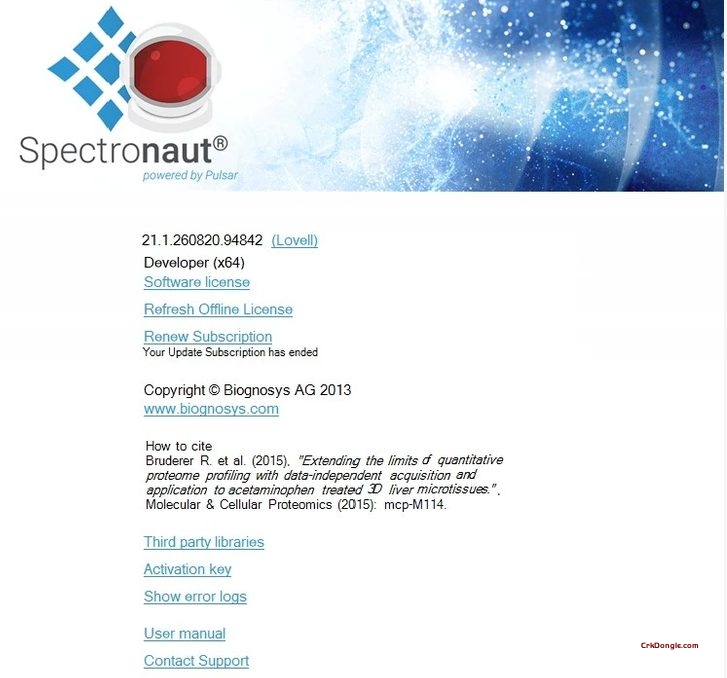
Spectronaut 21.1: DIA Proteomics & Multiomics Platform Spectronaut 21.1 is the latest version of Biognosys’ flagship software for data-independent acquisition (DIA) proteomics, officially launched in June 2025 . This release delivers significant advancements in four key areas: next‑generation directDIA, AI‑driven PTM analysis, immunopeptidomics control, and large‑scale cohort performance optimization . Key New Features in Version 21 Enhanced directDIA & Identification Depth Spectronaut 21 delivers substantial improvements for library‑free DIA discovery workflows, powered by next‑generation directDIA with advanced machine and deep learning : ~10% more protein groups across 65 benchmark proteomics datasets, and ~11% more peptides across 27 immunopeptidomics datasets AI/ML scoring enhancements for both tryptic and unspecific peptides Automated sub‑sample runs to boost efficiency for large‑scale cohort analyses Up to...
pectronaut 21.0 is the Biognosys’ gold-standard software for data-independent acquisition (DIA) proteomics analysis. Trusted by researchers at leading institutions worldwide including Yale University, Max Planck Institute, and Bruker Corporation, it delivers unparalleled throughput and precision for protein identification and quantification across discovery, translational, and clinical research applications. What’s New in Spectronaut 21.0 Advanced ML Scoring & AI Models ~10% more protein groups identified on average across 65 proteomics datasets ~11% more immunopeptides identified across 27 immunopeptidomics datasets Next-generation AI models accurately predict unseen post-translational modifications (PTMs) Improved AI predictions for both tryptic and unspecific peptides Improved Computational Performance Up to 30% faster merging steps when parallelizing 10% faster directDIA for immunopeptidomics (Class I and II) 15% faster directDIA for timsTOF...
Spectronaut 20 is a powerful software package developed by Biognosys for analyzing data-independent acquisition (DIA) proteomics experiments. It is designed to deliver high-performance analysis with enhanced speed, depth, and scalability, particularly for complex proteomic datasets. Below is an overview based on available information: Key Features of Spectronaut 20: Kuiper Search Engine: Introduces a new search engine that significantly boosts speed and depth, achieving ~70% faster runtimes and ~75% more HLA class I peptide identifications compared to Spectronaut 19. It excels in complex search spaces like unspecific digests and PTM (post-translational modification) discovery. directDIA Workflow: Streamlines immunopeptidomics by outperforming library-based approaches, identifying ~40% more HLA type I peptides on average. This eliminates the need for extensive spectral library creation, saving time...
Spectronaut is a Data Acquisition for Independent Analysis (DIA) proteomics experiment designed to. 1. Building hybrid libraries By combining large-scale spectral libraries from other sources (project or resource libraries) with DIA data from the samples themselves (directDIA), it is possible to obtain large quantitative protein counts without having to build the libraries yourself. 2. Labeling Workflow With Biognosys’ new PQ500 Isotope Labeled Peptide Kit, target proteins can be quantified absolutely and across 5 orders of magnitude by off-label quantification. 3. Host Cell Proteins Low-abundance host cell proteins can be characterized and quantified with high precision by correcting for residual proteins.