Petroleum
Petroleum E&P Software Solutions

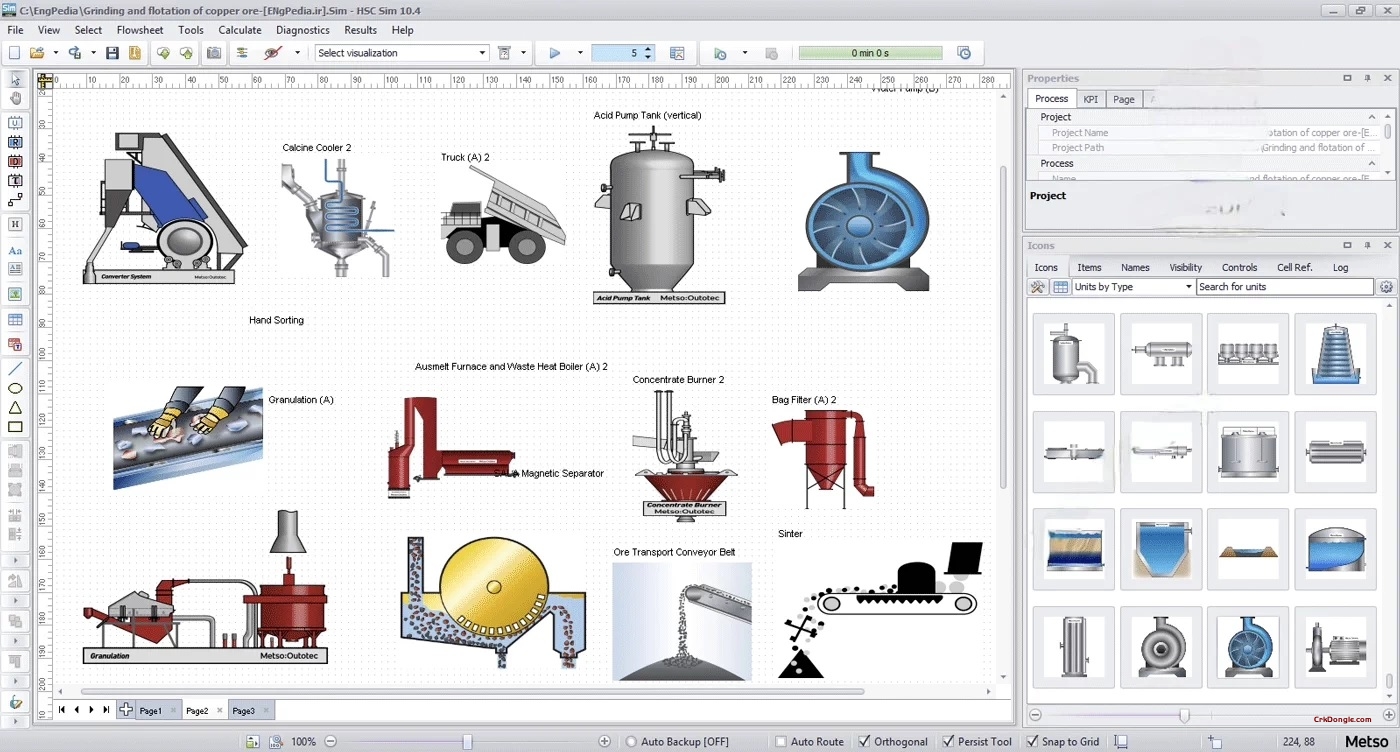
HSC Chemistry 10.7.0: The Essential Thermodynamic Workbench for Process Industries HSC Chemistry 10.7.0 is the definitive, all-in-one software package for chemical reaction and equilibrium calculations, widely regarded as an indispensable tool in extractive metallurgy, chemical engineering, and process development. Developed by Outotec (now part of Metso Outotec), it combines an extensive thermochemical database with powerful simulation modules, enabling engineers and researchers to model complex chemical processes from first principles. By calculating heat and mass balances, predicting reaction products, and optimizing conditions, HSC Chemistry provides the scientific foundation for designing efficient, sustainable, and economically viable industrial processes. Core Philosophy: Predictive Process Design Through Thermodynamics HSC’s power stems from its rigorous application of thermodynamics. Instead of relying solely on empirical data, users...
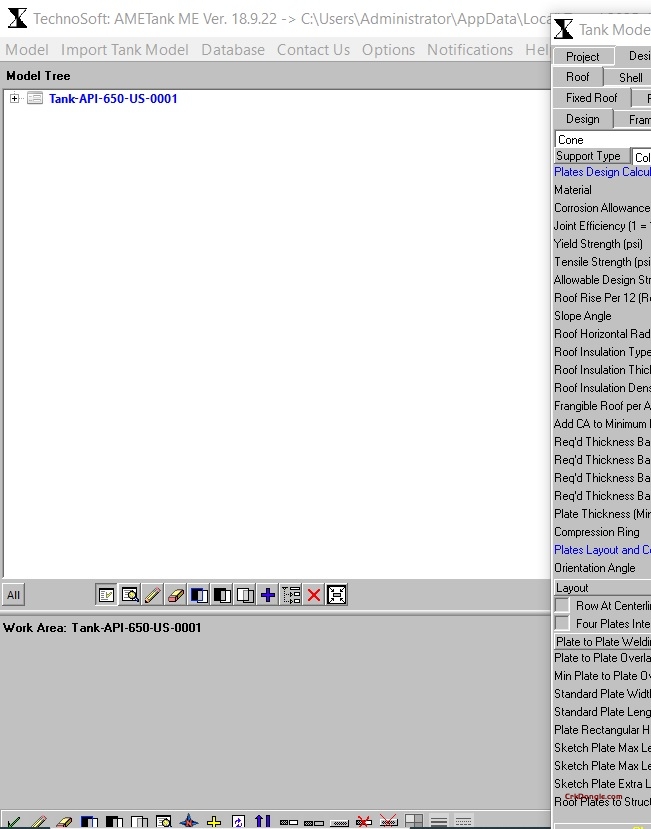
AMETANK 2025: The Authoritative Suite for Global Storage Tank Engineering AMETANK 2025 is the industry-preeminent software suite dedicated to the complete engineering lifecycle of aboveground, welded steel storage tanks. It provides a rigorous, code-compliant digital environment for the design of new tanks and the fitness-for-service assessment of existing tanks, strictly adhering to the latest editions of API Standard 650 (Welded Tanks for Oil Storage), API Standard 653 (Tank Inspection, Repair, Alteration, and Reconstruction), EN 14015, and relevant sections of the ASME Boiler and Pressure Vessel Code. This software is the indispensable tool for engineers, inspectors, and fabricators who require mathematical certainty in ensuring the safety, integrity, and regulatory compliance of critical liquid storage infrastructure in the oil & gas, petrochemical,...
Accelerate Subsurface Decision-Making with AI and Integrated Workflows Schlumberger Petrel 2022 represents a significant step in the evolution of the industry’s premier platform for subsurface characterization and modeling. Released by Schlumberger (now SLB), this version emphasizes digital transformation, AI-powered automation, and seamless data integration to help geoscientists, reservoir engineers, and asset teams unlock greater value from complex reservoirs. Petrel 2022 bridges the gap between traditional desktop expertise and the future of cloud-enabled, collaborative subsurface analysis. Key Themes & Major Advancements in Petrel 2022 The 2022 release focused on enhancing core workflows, introducing intelligent automation, and laying the groundwork for deeper cloud integration. 1. Enhanced Seismic Interpretation & Geophysics Deep-Learning Fault Detection: A breakthrough in seismic interpretation. This AI-powered tool automatically...
METSIM is a comprehensive process simulation software developed by PROWARE (also associated with Metsim International LLC), primarily used in the mining, metallurgical, and chemical industries. It enables engineers to perform detailed mass and energy balances for complex flowsheets, supporting plant design, capital cost estimation, technical evaluations, and process optimization. The software originated as a metallurgical simulator but has expanded to include heat balances, chemistry modeling, process controls, equipment sizing, and cost analysis. Key features include: Unit Operations: Over 200 predefined operations (e.g., SAG/ball milling, gold cyanidation/precipitation, crushers, flotation cells), plus generic tools like stream splitters and phase separators. Computational Methods: Uses a combination of algorithms for efficient balancing, written in the APL programming language for flexibility and rapid updates. Modular...
AGS Res2DInv 5.0: Advanced 2D Resistivity and IP Inversion Software Discover the cutting-edge features of AGS Res2DInv 5.0, a premier tool from Aarhus GeoSoftware (AGS) for processing and inverting 2D electrical resistivity tomography (ERT) and induced polarization (IP) data. Integrated into the Seequent ecosystem, this version revolutionizes geophysical workflows for groundwater exploration, environmental monitoring, geotechnical assessments, and mineral prospecting. With lightning-fast inversions and intuitive tools, Res2DInv 5.0 transforms raw survey data into actionable subsurface models, supporting arrays like Wenner, Schlumberger, and dipole-dipole for precise imaging of geological structures. Key New Features in Res2DInv 5.0 AGS Res2DInv 5.0 overhauls the user experience with a redesigned interface, enhanced processing, and visualization tools that slash iteration times and boost accuracy in resistivity inversion....
Key Themes and Major Enhancements in Petrel 2024.9 1. Cloud-Native and Digital Platform Integration (DELFI) This is the most significant strategic direction. Petrel 2024 is deeply integrated with SLB’s DELFI cognitive E&P environment. Petrel on DELFI: Users can now launch a full, pre-configured Petrel environment directly from a web browser. This eliminates complex local installations and IT overhead. Shared Earth Model in the Cloud: The reservoir model is no longer tied to a single desktop. Teams across the globe can collaborate on the same project stored in the cloud, with version control and concurrent access to different parts of the model. Seamless Data Access: Directly access and integrate data from various sources (e.g., OSDU Data Platform) without manual transfers, ensuring...
AGS Res2DInv 5.0: Advanced Software for 2D Electrical Resistivity Tomography (ERT) and IP Inversion AGS Res2DInv 5.0 is a professional-grade software package used for the processing and inversion of 2D electrical imaging data. It is designed for geophysicists, geologists, hydrologists, and environmental engineers to interpret data from Electrical Resistivity Tomography (ERT) and Induced Polarization (IP) surveys, creating detailed subsurface models. Core Purpose of AGS Res2DInv 5.0 The software transforms raw field measurements of apparent resistivity and chargeability into a accurate 2D subsurface model that represents the true resistivity/IP distribution. This process, known as inversion, is crucial for moving beyond qualitative data to a quantitative geological model. Key Features & Capabilities 1. Robust Data Inversion Engine Smoothness-Constrained Inversion: Utilizes advanced least-squares...
Discover QITEAM HIFI 2025, the advanced audio analysis and measurement software. Perfect for audiophiles, engineers, and speaker designers for speaker testing, room acoustics, and amplifier characterization. QITEAM HIFI 2025 | High-Fidelity Audio Measurement & Analysis Software QITEAM HIFI 2025: Professional Audio Measurement Software for Hi-Fi Enthusiasts QITEAM HIFI 2025 is a sophisticated software suite designed for the measurement, analysis, and optimization of high-fidelity audio systems. It transforms a standard computer with a suitable audio interface into a powerful laboratory-grade audio analyzer, serving audiophiles, DIY speaker builders, and audio engineers. Core Purpose of QITEAM HIFI 2025 The software is built to provide objective, data-driven insights into the performance of audio components. It helps users answer critical questions about their gear: How...
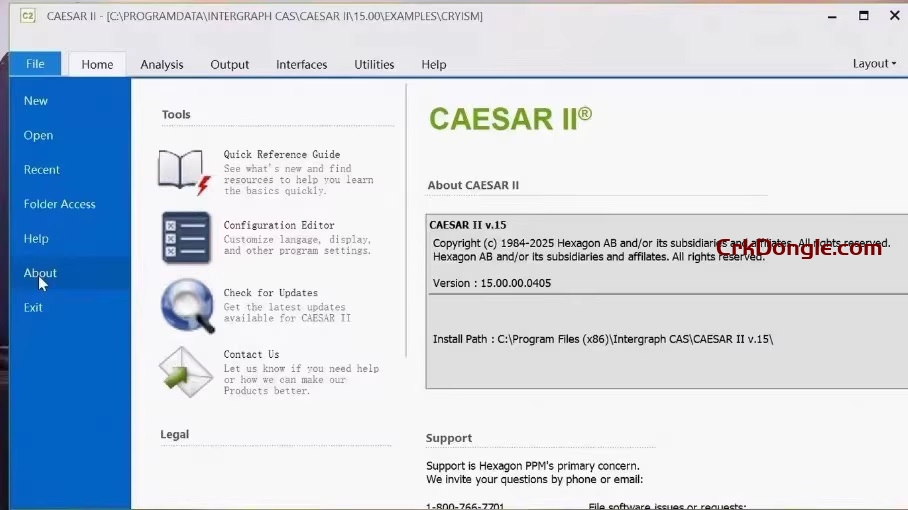
CAESAR II 15 is an advanced tool for designing and analyzing piping systems using input forms, online help, graphics, and extensive error detection. CAESAR II performs static and dynamic analysis of large piping models, steel structure models, or combined models. It generates ASME, B31, WRC, and rotating equipment reports to provide a complete description of piping system behavior under applied load conditions. Additional features such as the out-of-core solver, force spectrum analysis (for water hammer and safety valve solutions), time history, and large rotating rod hangers provide you with today’s most advanced computer-based piping software.
Overview of SLB Flaresim 2025.3 SLB Flaresim (formerly Schlumberger Flaresim) is the industry-standard software for flare system design and simulation, primarily used in the oil and gas sector. Developed by professional engineers, it enables accurate modeling of thermal radiation, noise footprints, and dispersion effects from flare systems in offshore platforms, refineries, gas plants, and chemical facilities. The software predicts surface temperatures exposed to radiation, supports 3D flame-shape analysis with multi-stack flexibility, and evaluates scenarios under varying wind conditions. It also integrates with SLB’s Symmetry process simulation software for end-to-end process modeling. Key applications include: Assessing health, safety, and environmental (HSE) risks related to flare emissions. Simulating combustible liquid dispersion during flame-out and flue gas dispersion. Generating comparative case studies within...
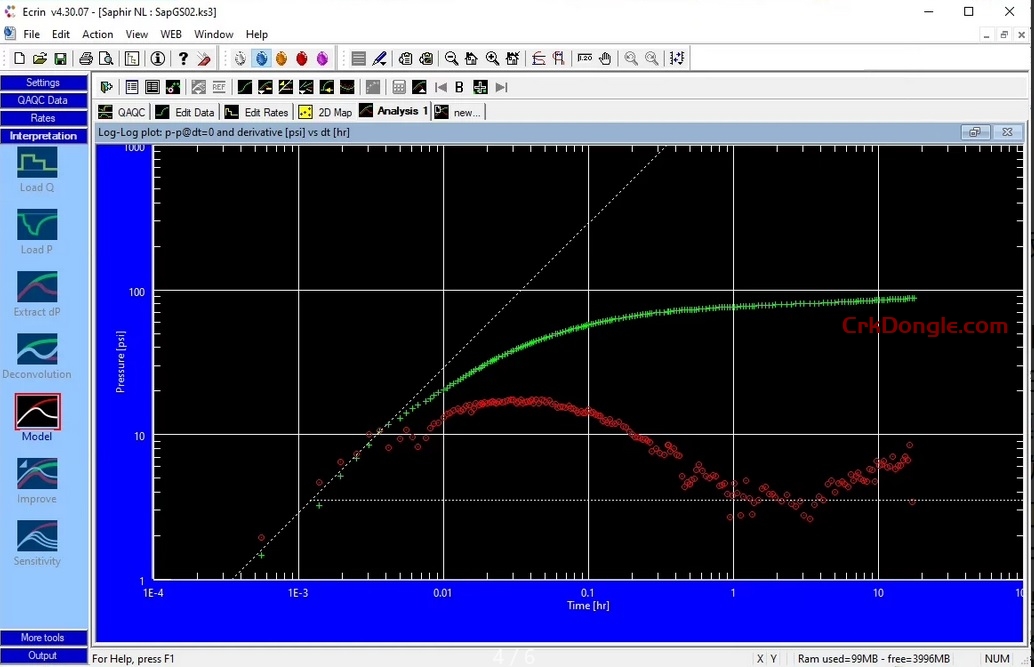
KAPPA Ecrin 4.30.07 is a point release in the 4.30 series of Ecrin, part of the KAPPA Suite developed by KAPPA Workbench (a division of Golden Energy and Engineering, under Halliburton since 2022). This software suite is a comprehensive toolset for petroleum engineers focusing on dynamic data analysis, reservoir characterization, and production optimization in the oil and gas industry. Ecrin specifically handles pressure and flow data analysis, enabling users to model well performance, interpret transient tests, and simulate reservoir behavior. Version 4.30.07, released in late 2024 as a minor update to 4.30 (initially launched in early 2024), emphasizes bug fixes, enhanced compatibility with modern data formats, and performance improvements for large datasets. It remains fully backward-compatible with earlier 4.x projects...
Schlumberger (SLB) PetroMod 2025 is a leading petroleum systems modeling (PSM) software suite designed for simulating the evolution of sedimentary basins. It integrates seismic, well, and geological data to predict hydrocarbon generation, migration, accumulation, and risks, while also supporting emerging applications like CO₂ storage and geothermal systems. PetroMod stands out as the only commercial tool offering fully PVT-controlled modeling of n-component, three-phase (oil-gas-water) relationships throughout the entire migration process at basin scale. The software supports 1D, 2D, and 3D modeling with a unified simulator and user interface for seamless workflows. It can operate standalone or integrate with SLB’s Petrel E&P platform for enhanced structural modeling and data calibration. Key enhancements in 2025 include refined CO₂ advection modeling for better prediction...
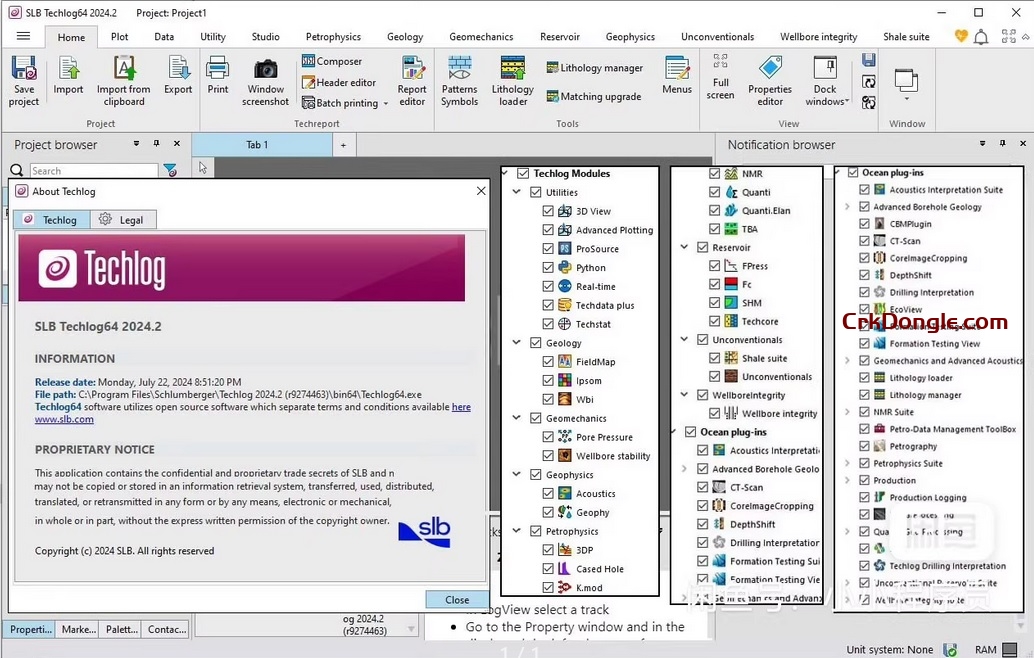
SLB Techlog (formerly Schlumberger Techlog) wellbore software is a leading petrophysical analysis and interpretation platform designed for geoscientists and engineers working with wellbore data. It provides a unified environment for integrating, visualizing, and interpreting logs, core data, borehole images, and production information across the entire well lifecycle—from exploration to production. As part of SLB’s DELFI cognitive E&P environment, Techlog 2024.5 emphasizes reliability, extensibility, and domain-specific advancements, supporting collaborative workflows in complex subsurface environments like deepwater, shale, and unconventional reservoirs. This release, available as of late 2024, continues the annual update cycle with a focus on enhanced user experience, Python integration, and petrophysical modeling, building on prior versions like 2024.3 and 2024.1. Key New Features in Techlog 2024.5 Techlog 2024.5 advances...
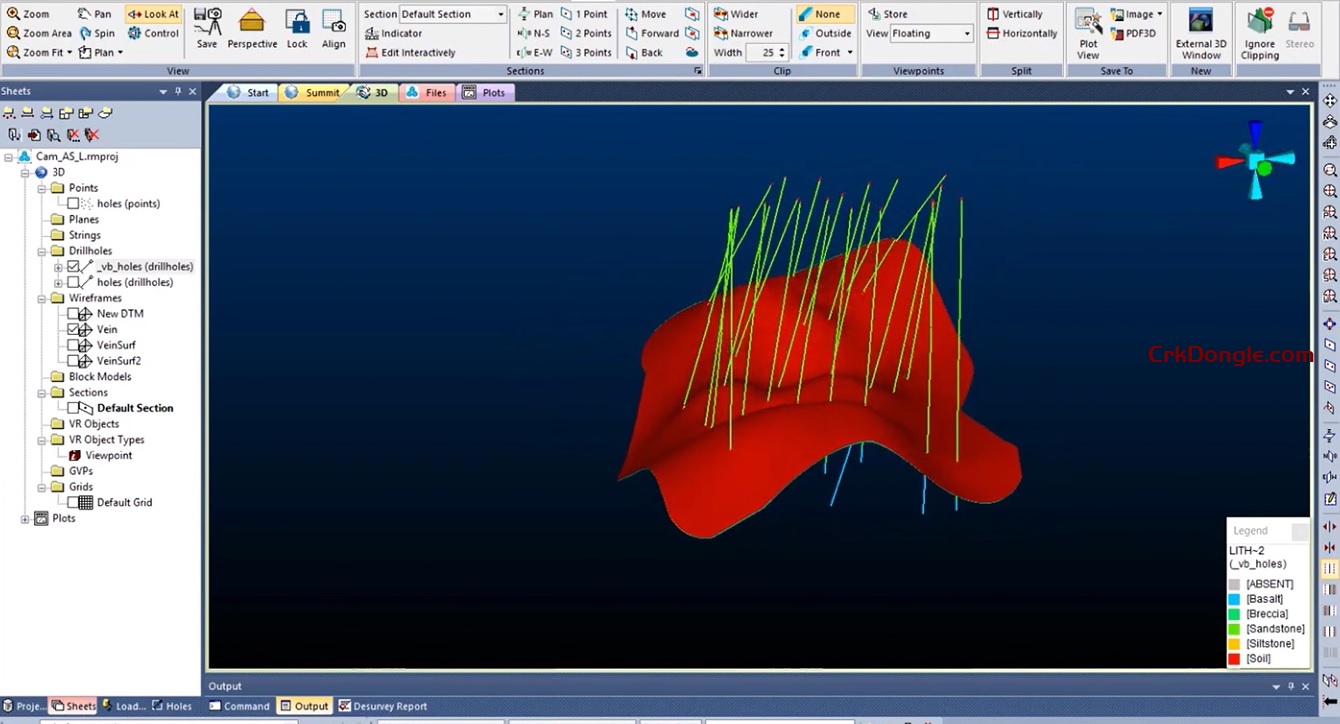
Datamine Studio RM (Resource Modeling) 2025 is the latest iteration of Datamine’s flagship geological modeling and resource estimation software, developed by Datamine Software (part of SSR Mining). Released as Studio RM 3.0 in July 2025, it builds on the proven Studio platform to deliver advanced tools for geologists, geostatisticians, and mining engineers. The software supports the full mining value chain—from exploration data analysis to compliant resource reporting—handling complex geological settings, large datasets, and commodities like metals, coal, and industrial minerals. It integrates implicit and explicit modeling techniques, block modeling, and grade estimation workflows to ensure models meet standards such as JORC, SAMREC, NI 43-101, and Guide 7. Available as a standalone tool or part of Studio RM Pro (with Supervisor...
Stimpro is a comprehensive matrix acidizing analysis software used for designing, simulating, and analyzing acid stimulation treatments in oil and gas wells. It helps engineers model fluid placement, optimize treatment schedules, and evaluate post-treatment performance. Key features typically include: Modeling of acid placement and reaction in the formation. Real-time data integration for treatment monitoring. Post-job analysis to assess stimulation effectiveness. Support for various reservoir types and acid systems.
PanSystem 3.4 is a version of PanSystem®, a leading software tool for well-test analysis in the oil and gas industry, developed by Weatherford (now part of SLB following acquisitions). Released around 2010–2012 as part of the product’s evolution, it focuses on transient well testing, enabling engineers to analyze pressure and rate data from wells to estimate reservoir properties, boundaries, and performance. The software is robust, user-friendly, and supports both standard industry models and custom user-defined ones for flexibility in complex reservoir scenarios. This version builds on earlier releases (e.g., 3.0 and 3.2) and precedes 3.5 (2013) and 4.0 (2015), with enhancements in data handling, plotting, and simulation capabilities. It remains relevant for legacy workflows, though newer versions offer improved integration...