Petroleum Page 3
Petroleum E&P Software Solutions

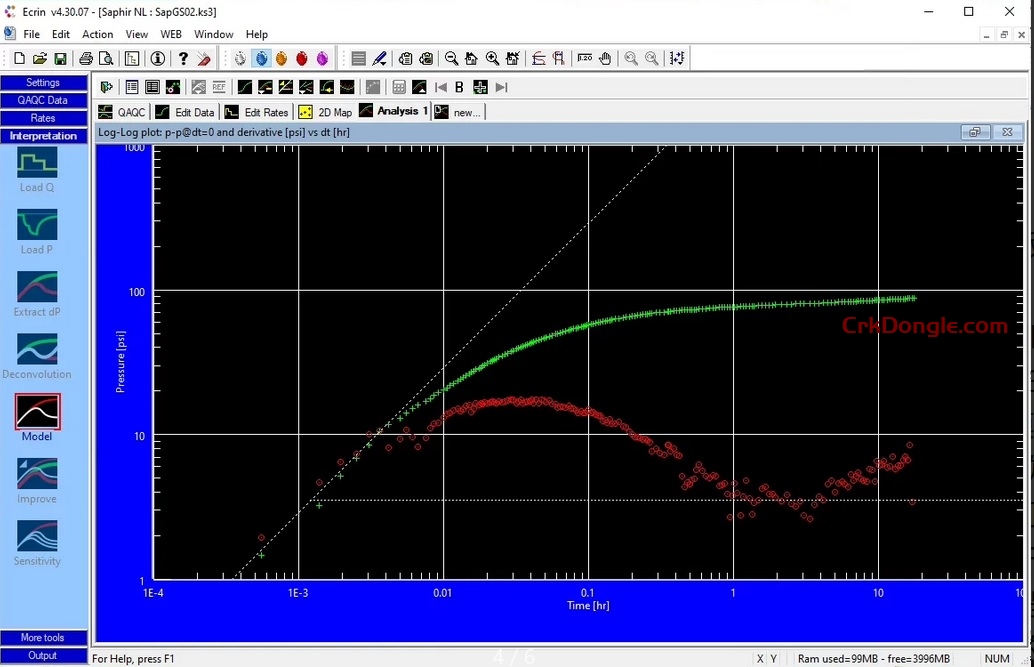
KAPPA Ecrin 4.30.07 is a point release in the 4.30 series of Ecrin, part of the KAPPA Suite developed by KAPPA Workbench (a division of Golden Energy and Engineering, under Halliburton since 2022). This software suite is a comprehensive toolset for petroleum engineers focusing on dynamic data analysis, reservoir characterization, and production optimization in the oil and gas industry. Ecrin specifically handles pressure and flow data analysis, enabling users to model well performance, interpret transient tests, and simulate reservoir behavior. Version 4.30.07, released in late 2024 as a minor update to 4.30 (initially launched in early 2024), emphasizes bug fixes, enhanced compatibility with modern data formats, and performance improvements for large datasets. It remains fully backward-compatible with earlier 4.x projects...
Schlumberger (SLB) PetroMod 2025 is a leading petroleum systems modeling (PSM) software suite designed for simulating the evolution of sedimentary basins. It integrates seismic, well, and geological data to predict hydrocarbon generation, migration, accumulation, and risks, while also supporting emerging applications like CO₂ storage and geothermal systems. PetroMod stands out as the only commercial tool offering fully PVT-controlled modeling of n-component, three-phase (oil-gas-water) relationships throughout the entire migration process at basin scale. The software supports 1D, 2D, and 3D modeling with a unified simulator and user interface for seamless workflows. It can operate standalone or integrate with SLB’s Petrel E&P platform for enhanced structural modeling and data calibration. Key enhancements in 2025 include refined CO₂ advection modeling for better prediction...
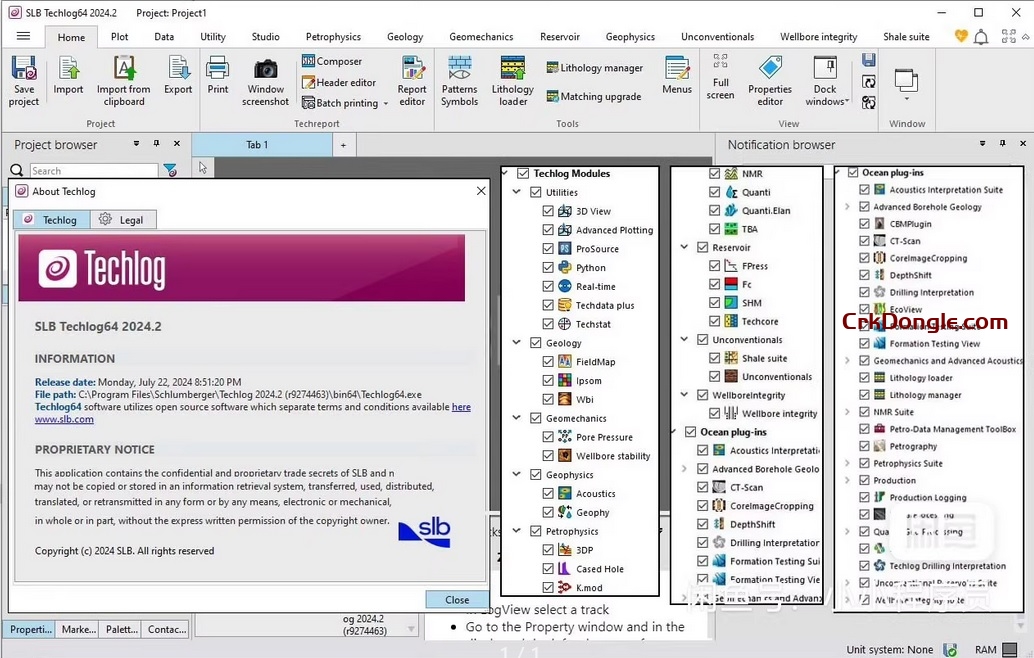
SLB Techlog (formerly Schlumberger Techlog) wellbore software is a leading petrophysical analysis and interpretation platform designed for geoscientists and engineers working with wellbore data. It provides a unified environment for integrating, visualizing, and interpreting logs, core data, borehole images, and production information across the entire well lifecycle—from exploration to production. As part of SLB’s DELFI cognitive E&P environment, Techlog 2024.5 emphasizes reliability, extensibility, and domain-specific advancements, supporting collaborative workflows in complex subsurface environments like deepwater, shale, and unconventional reservoirs. This release, available as of late 2024, continues the annual update cycle with a focus on enhanced user experience, Python integration, and petrophysical modeling, building on prior versions like 2024.3 and 2024.1. Key New Features in Techlog 2024.5 Techlog 2024.5 advances...
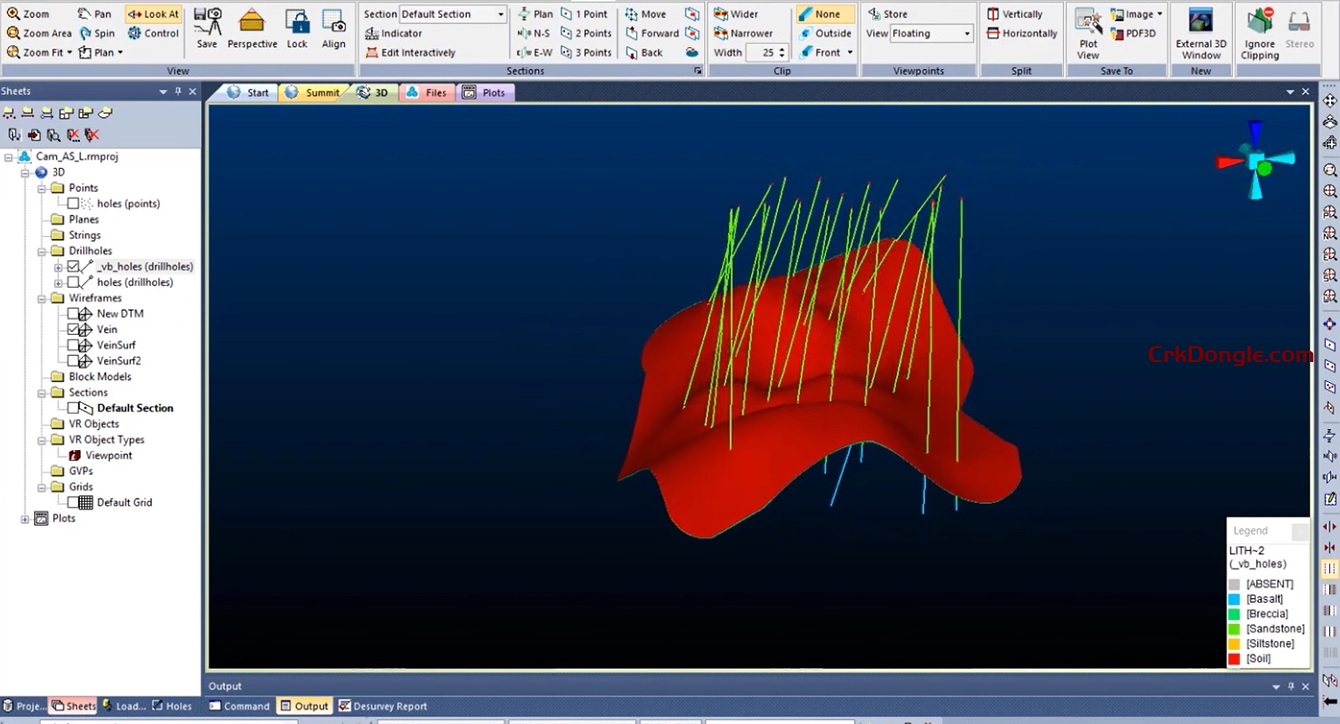
Datamine Studio RM (Resource Modeling) 2025 is the latest iteration of Datamine’s flagship geological modeling and resource estimation software, developed by Datamine Software (part of SSR Mining). Released as Studio RM 3.0 in July 2025, it builds on the proven Studio platform to deliver advanced tools for geologists, geostatisticians, and mining engineers. The software supports the full mining value chain—from exploration data analysis to compliant resource reporting—handling complex geological settings, large datasets, and commodities like metals, coal, and industrial minerals. It integrates implicit and explicit modeling techniques, block modeling, and grade estimation workflows to ensure models meet standards such as JORC, SAMREC, NI 43-101, and Guide 7. Available as a standalone tool or part of Studio RM Pro (with Supervisor...
Stimpro is a comprehensive matrix acidizing analysis software used for designing, simulating, and analyzing acid stimulation treatments in oil and gas wells. It helps engineers model fluid placement, optimize treatment schedules, and evaluate post-treatment performance. Key features typically include: Modeling of acid placement and reaction in the formation. Real-time data integration for treatment monitoring. Post-job analysis to assess stimulation effectiveness. Support for various reservoir types and acid systems.
PanSystem 3.4 is a version of PanSystem®, a leading software tool for well-test analysis in the oil and gas industry, developed by Weatherford (now part of SLB following acquisitions). Released around 2010–2012 as part of the product’s evolution, it focuses on transient well testing, enabling engineers to analyze pressure and rate data from wells to estimate reservoir properties, boundaries, and performance. The software is robust, user-friendly, and supports both standard industry models and custom user-defined ones for flexibility in complex reservoir scenarios. This version builds on earlier releases (e.g., 3.0 and 3.2) and precedes 3.5 (2013) and 4.0 (2015), with enhancements in data handling, plotting, and simulation capabilities. It remains relevant for legacy workflows, though newer versions offer improved integration...
Tesseral Pro is a comprehensive geophysical modeling software developed by Tesseral Technologies Inc., specializing in full-wave seismic simulation and analysis for oil & gas exploration, academic research, and geophysical workflows. It enables users to build detailed 2D and 3D velocity models, simulate seismic wave propagation, generate synthetic seismograms, and perform ray tracing to support survey planning, processing quality control (QC), and interpretation. Based on advanced finite-difference methods, Tesseral Pro handles complex geological structures, including anisotropic media, thin layering effects (quasi-anisotropy, dispersion), and fracturing, making it ideal for pre-stack and post-stack interpretations. The software bridges the gap between simplified 2D/2.5D models for rapid analysis and full 3D simulations, reducing the need for computationally intensive full-wave 3D runs during routine tasks. Tesseral...
tNavigator v25.2 Overview tNavigator is an integrated reservoir modeling and simulation software suite developed by Rock Flow Dynamics (RFD), a leader in high-performance solutions for the energy sector. It provides a unified platform for the entire upstream workflow, from seismic interpretation and geological modeling to dynamic simulation, history matching, uncertainty analysis, and production optimization. tNavigator excels in handling complex reservoirs with advanced features like full-field compositional simulation, geomechanics coupling, and AI-driven forecasting. It’s optimized for high-performance computing (HPC), supporting GPU acceleration to drastically reduce simulation times—often from weeks to hours—for large-scale models in oil & gas, carbon capture (CCUS), geothermal, and hydrogen storage applications. The suite includes modules such as: Geology & Model Designer: For static model building and...
Overview of Codeware COMPRESS 2025 Codeware COMPRESS is a leading software application for designing and analyzing pressure vessels and heat exchangers in compliance with ASME Boiler and Pressure Vessel Code Section VIII, Division 1 and 2. The 2025 release, announced in January 2025, introduces significant enhancements focused on advanced analysis, code updates, and workflow efficiencies. It’s designed for mechanical engineers and fabricators to streamline design cycles, perform compliance checks, and generate detailed reports. Key New Features in COMPRESS 2025 Based on the official release notes, here are the highlighted updates: Feature Description Finite Element Analysis (FEA) for Nozzles Built-in FEA engine for linear elastic analysis of nozzle-to-shell junctions per ASME Div. 2 Part 5 and Div. 1 Appendix 46. Uses...
Overview of Schlumberger ECLIPSE Reservoir Simulator Schlumberger (now SLB) ECLIPSE is a leading industry-standard reservoir simulation software used in the oil and gas sector for modeling and predicting the dynamic behavior of hydrocarbon reservoirs. It supports black oil, compositional, thermal, and streamline simulation methods, enabling engineers to simulate fluid flow, optimize well placement, perform history matching, and forecast production. With over 800 companies worldwide relying on it, ECLIPSE is renowned for its high-speed parallel processing, accuracy, and integration with tools like Petrel for enhanced reservoir modeling. ECLIPSE in 2025: Latest Releases and Updates As of October 2025, the most recent official release is ECLIPSE 2023.1, which focuses on advancing data-driven decision-making through AI integration, carbon storage solutions, and scalable...
Landmark Drillworks is a geomechanical software suite developed by Halliburton Landmark, designed for petroleum engineers, geologists, and drilling teams. It enables analysis of subsurface conditions, pore pressure prediction, geomechanical modeling, and well planning to mitigate risks like drilling hazards, optimize mud and casing programs, and reduce costs in complex reservoirs. The software integrates with other Halliburton tools like OpenWorks and DecisionSpace 365 for enhanced data management and real-time decision-making. Key Features of Drillworks Pore Pressure and Fracture Gradient Analysis: Uses seismic, well log, and geologic data to build geopressure models, helping predict and prevent issues like kicks, stuck pipes, or lost circulation. 3D Visualization and Modeling: Supports importing horizons, faults, and surfaces for holistic 3D views of wellbore data (e.g.,...
OpenFlows WorkSuite Overview Based on the query “OpenFlow Suite 2024.1,” a suite of hydraulics and hydrology modeling software developed by Bentley Systems. This is a professional engineering toolset for water distribution, wastewater, and stormwater systems, with compatibility and updates aligning with 2024 standards (e.g., support for AutoCAD 2024 and ArcGIS Pro 3.1). It’s widely used for infrastructure design, analysis, and operations in civil engineering and utilities. OpenFlows WorkSuite integrates multiple modules into a unified platform, running as a standalone application or within CAD/GIS environments like AutoCAD, MicroStation, ArcGIS, and more. It’s licensed in tiers based on pipe count (1,000, 5,000, or unlimited) and requires Microsoft Windows 10/11 or Server 2019/2022. Key Modules in OpenFlows WorkSuite Module Description Key Features OpenFlows...
Overview of Paradigm Geolog 2024 Paradigm Geolog 2024 (version 2024, part of the Emerson Paradigm suite) is a leading petrophysical and formation evaluation software for the upstream oil and gas sector. Developed by Paradigm (now under Emerson’s Subsurface Science and Engineering division), it enables geoscientists, petrophysicists, and engineers to perform advanced log analysis, reservoir characterization, and well data interpretation. The software supports multi-well workflows, integrates with seismic data, and provides tools for probabilistic modeling and geomechanics. As of September 2025, it’s integrated into Emerson’s broader E&P portfolio, emphasizing automation, data interoperability (e.g., with OSDU), and AI-assisted insights for faster, more accurate subsurface evaluations. Paradigm Geolog has been an industry staple since the 1990s, with 90% adoption among top oil producers...
GeoSoftware Jason 2025 is the latest iteration of the Jason® software suite, developed by GeoSoftware (a CGG company), a global leader in geoscience software and consulting for subsurface reservoir characterization. Jason focuses on advanced seismic inversion and rock physics modeling to optimize field development, reservoir management, and well planning in oil and gas exploration. It integrates geophysics, geology, and petrophysics for intuitive workflows that deliver precise predictions of reservoir properties like porosity, lithology, and fluid content. The 2025 series (starting with v2025.0 in December 2024 and updated through v2025.3) emphasizes usability, performance, and AI-enhanced analytics for complex reservoirs. As of September 25, 2025, v2025.3 is the most recent patch, incorporating client feedback for streamlined efficiency. Key Features Seismic Inversion: Deterministic...
Overview of Schlumberger ECLIPSE 2024 Schlumberger (now SLB) ECLIPSE 2024 is the latest iteration of the industry-standard reservoir simulation software, designed for modeling and simulating multi-phase fluid flow (oil, gas, water) in subsurface reservoirs. It supports black oil, compositional, thermal, and streamline simulation models, enabling accurate predictions of reservoir performance from exploration to production. ECLIPSE is widely used by petroleum engineers and geoscientists in over 70 countries to optimize hydrocarbon recovery, manage uncertainties, and support decision-making in complex fields. The 2024 release emphasizes enhanced field management, reporting, and usability, with incremental updates (e.g., 2024.1, 2024.3, 2024.4) building on prior versions like 2023.1. As of September 25, 2025, version 2024.4 is the most recent patch, focusing on AI integration and scalability...
Overview of KAPPA Emeraude 5.6 KAPPA Emeraude 5.6 is a specialized software module within the KAPPA-Workstation platform, developed by KAPPA Engineering for advanced production logging (PL) interpretation and cased-hole log analysis in the oil and gas industry. Released around mid-2023 as a major update (v5.40), it focuses on handling complex well data from horizontal wells, distributed measurements, and high-resolution tools. This version enhances dynamic data analysis across scales, from high-frequency transient data to low-resolution production rates, supporting full-field history matching, formation testing, and well integrity assessments. It integrates seamlessly with other KAPPA tools like Saphir NL (pressure transient analysis) and Topaze NL (rate transient analysis), making it essential for petroleum engineers optimizing reservoir performance and production profiles. Key New Features...