Other Engineering Page 12
Other Engineering

Peaks GlycanFinder 3.0: Advanced Software for Glycoproteomics Discovery Peaks GlycanFinder 3.0 is a specialized bioinformatics module within the renowned PEAKS Studio software suite, designed specifically for the challenging analysis of protein glycosylation. It automates the identification of glycans (sugar molecules) attached to proteins and characterizes the exact site of attachment (glycosylation site) from mass spectrometry (MS) data, empowering researchers in biopharmaceutical development, biomarker discovery, and fundamental glycobiology. Core Function: Decoding Protein Glycosylation from MS Data Its primary function is to process complex LC-MS/MS data to identify both the glycan structure and its specific location on a peptide backbone. This is critical because glycosylation dramatically affects a protein’s function, stability, and immunogenicity, especially for therapeutic antibodies and other biologics. Key Functions:...
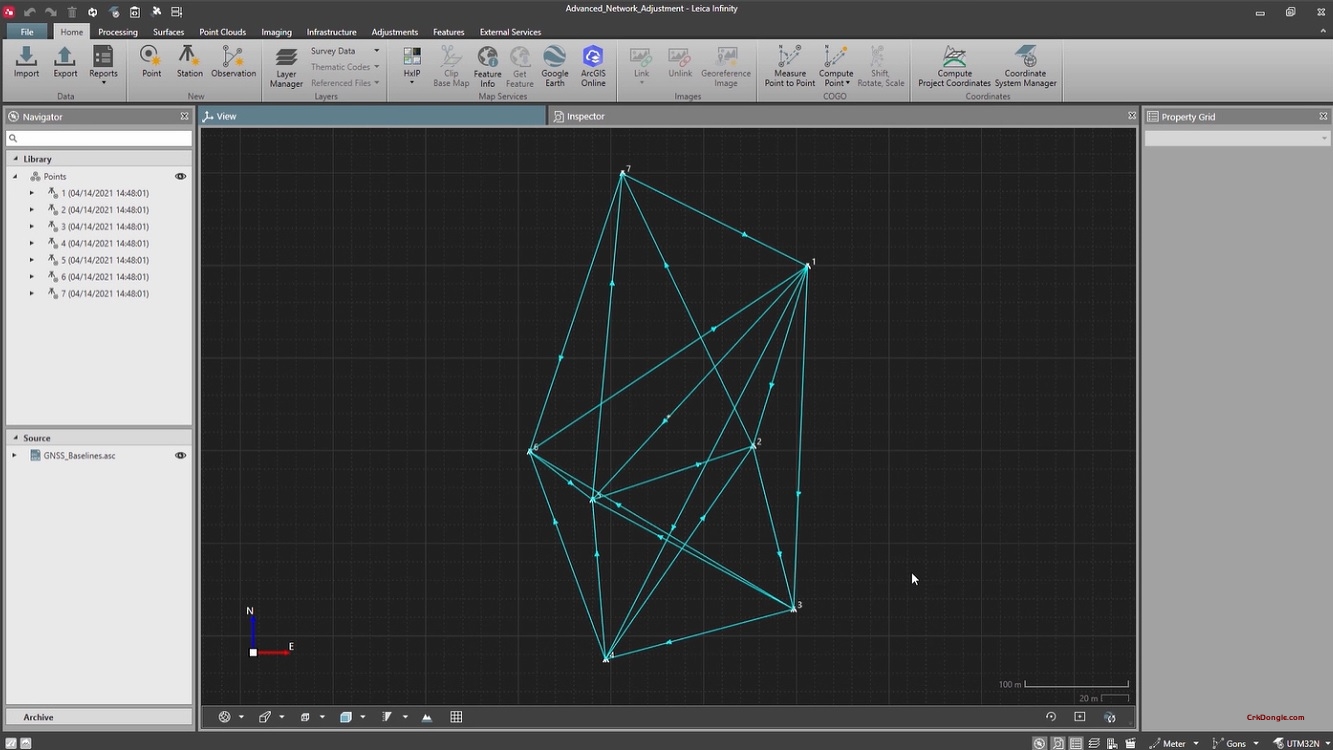
Leica Infinity 5.0: The Unified Hub for Survey Data Processing Leica Infinity 5.0 is a comprehensive office software suite designed for the processing, analysis, and management of all data collected by Leica Geosystems surveying instruments. It serves as a central platform where raw field data from GNSS receivers, total stations, and digital levels is transformed into precise, reliable coordinates and deliverables for mapping, construction, and engineering projects. Core Function: From Raw Measurements to Certified Results Its primary role is to act as the definitive link between field collection and final project deliverables. It performs rigorous quality control, applies corrections, and manages complex survey networks to produce results that meet professional accuracy standards. Key Functions: GNSS Data Processing: Processes static, rapid-static,...
Lhasa Nexus 2.7: The In Silico Platform for Chemical Safety Assessment Lhasa Nexus 2.7 is a specialized software suite for predictive toxicology and metabolism, primarily used in pharmaceutical development, chemical safety, and regulatory science. It applies expert knowledge and computational models to predict the potential toxicity and metabolic fate of chemical compounds, helping researchers prioritize experiments, mitigate risks, and support regulatory submissions. Core Function: Virtual Screening for Chemical Hazards The software’s primary function is to provide early, computer-based (“in silico”) assessments of a molecule’s safety profile. It helps answer critical questions: “Could this compound be mutagenic, carcinogenic, or toxic?” and “How will the body metabolize it?” before costly laboratory or clinical testing begins. Key Functions: Toxicity Prediction: Utilizes well-established methodologies...
ReliaSoft 2024.2: The Comprehensive Suite for Product Reliability & Lifecycle Management ReliaSoft 2024.2 is a leading integrated software suite dedicated to reliability engineering and lifecycle data analysis. It provides engineers and analysts across aerospace, automotive, electronics, and energy sectors with the statistical tools needed to predict product life, identify failure modes, plan effective tests, and optimize maintenance strategies throughout a product’s lifecycle. Core Function: Data-Driven Decision Making for Product Durability The suite’s core purpose is to transform field failure data, test results, and engineering knowledge into actionable insights that improve product reliability, safety, and cost-effectiveness. It applies rigorous statistical methods to model failure behavior and quantify risks. Key Applications & Core Tools: Life Data Analysis (Weibull++): The flagship module for...
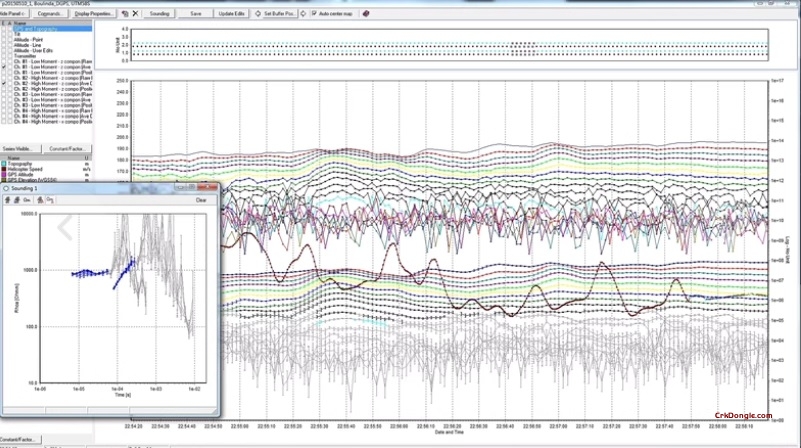
Aarhus Workbench v2025.1: The Integrated Platform for Geophysical Inversion Aarhus Workbench v2025.1 is a specialized software package for processing, modeling, and inverting geophysical data, with a strong focus on Transient Electromagnetic (TEM) methods, Spectral Induced Polarization (SIP), and seismic data. Developed by Aarhus GeoSoftware, it is a key tool for hydrogeologists, environmental consultants, and exploration geophysicists to create accurate 1D, 2D, and 3D subsurface models from field measurements. Core Function: Transforming Data into Subsurface Models Its primary function is to take raw or pre-processed geophysical field data and use advanced inversion algorithms to generate quantitative models of subsurface physical properties, such as electrical resistivity, which can be related to geology, groundwater, or mineral resources. Key Functions: Multi-Method Data Inversion: Specializes...
Trimble RealWorks 2025.11: The Central Hub for Reality Capture Data Trimble RealWorks 2025.11 is a comprehensive desktop software solution for processing, analyzing, and managing large datasets from 3D laser scanners, mobile mapping systems, and UAV-based photogrammetry. It is the essential tool for surveyors, engineers, and BIM managers to transform raw scan data into intelligent, actionable 2D and 3D deliverables. Core Function: From Raw Scans to Actionable Models The software serves as a central platform to import, clean, align (register), and analyze massive point clouds, enabling users to extract precise measurements, create detailed surface models, and generate deliverables for design, construction, and analysis. Key Functions: Point Cloud Registration & Management: Automatically aligns multiple scan positions into a unified, geo-referenced dataset and...
Synopsys S-Litho 2025: The Lithography Simulation Workbench for Advanced Nodes Synopsys S-Litho 2025 is a high-performance lithography simulation and analysis tool within the Synopsys EDA ecosystem, critical for ensuring the manufacturability of integrated circuits at sub-wavelength process nodes. It enables chip designers and process engineers to predict and correct distortions that occur when nanometer-scale circuit patterns are transferred onto silicon wafers using optical lithography. Core Function: Predicting and Correcting Pattern Distortions Its primary function is to simulate the complex physics of light diffraction and resist chemistry to model the final printed pattern on a wafer. This predictive capability is the foundation for applying essential Resolution Enhancement Techniques (RET) that make leading-edge chip manufacturing possible. Key Functions: Full-Chip Lithography Simulation: Rapidly...
Leapfrog Geo 2025.3: The Dynamic 3D Geological Modeling Platform Leapfrog Geo 2025.3 is a powerful and intuitive 3D geological modeling software that has revolutionized how geologists, hydrologists, and mining engineers visualize and interpret subsurface data. Developed by Seequent, it uses advanced implicit modeling algorithms to rapidly create dynamic, updatable 3D models from diverse data sources like drill holes, cross-sections, and GIS maps. Core Function: Fast, Dynamic Model Building Unlike traditional CAD-based methods, Leapfrog’s implicit engine automatically constructs geological surfaces and volumes directly from data points. When new data is added, the entire model updates dynamically, enabling real-time hypothesis testing and significantly faster iteration than manual techniques. Key Functions: Implicit Geological Modeling: Automatically generates fault networks, stratigraphic surfaces, and complex ore...
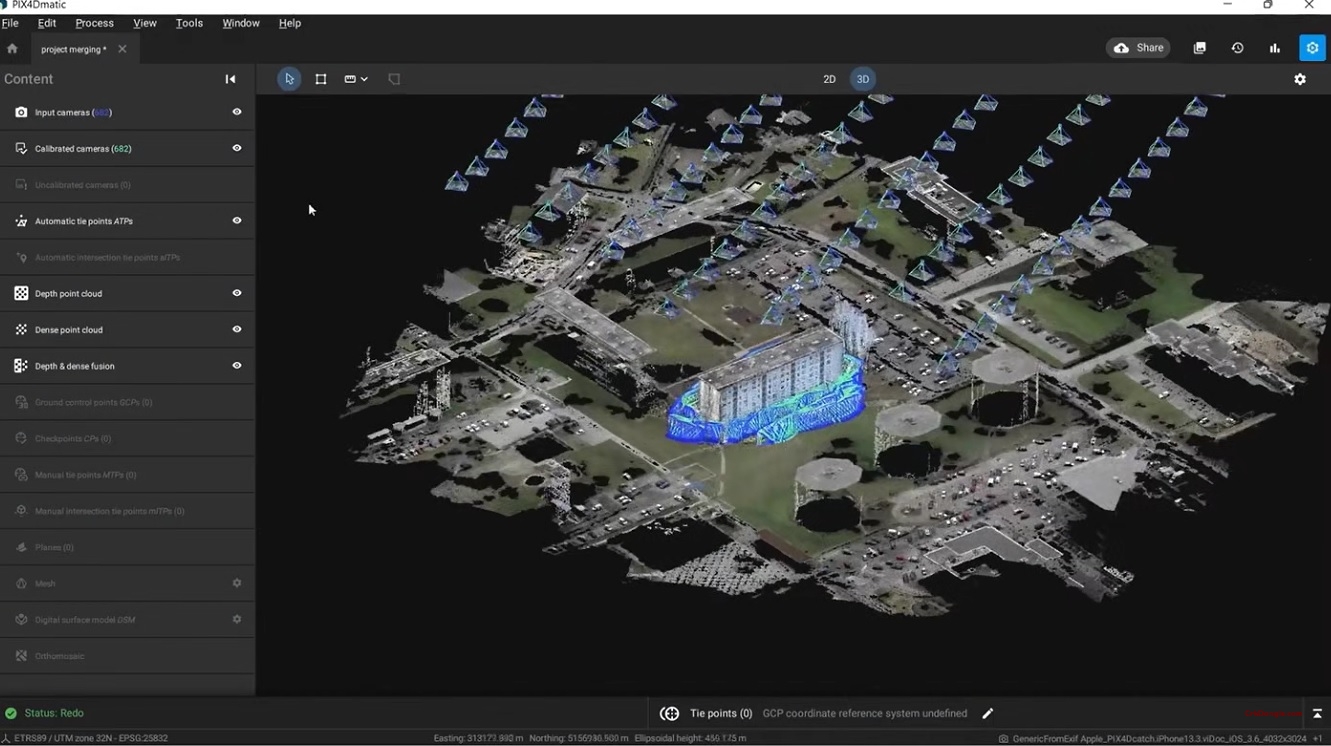
PiX4Dmatic 1.86: Professional Software for Large-Area Photogrammetry Projects PiX4Dmatic 1.86 is a specialized desktop photogrammetry software from Pix4D, engineered specifically for processing large-scale and demanding drone or aerial mapping projects. It is optimized for speed, accuracy, and handling massive datasets, making it the tool of choice for surveyors, GIS professionals, and mapping service providers who need to generate survey-grade geospatial outputs efficiently. Core Function: From Thousands of Images to Survey-Grade Maps Its primary function is to automatically align thousands of overlapping aerial photos, reconstruct the scene in 3D, and produce highly accurate, georeferenced 2D and 3D map outputs for professional analysis and delivery. Key Functions: High-Throughput Processing Engine: Utilizes advanced algorithms and GPU acceleration to process thousands of images and...
MIPAR 5.3: Essential Software for Quantitative Microstructure Analysis MIPAR 5.3 is a specialized, user-driven image analysis software designed to extract precise, quantitative data from microscopy and scientific images. It empowers researchers and engineers, particularly in materials science, geology, and life sciences, to perform complex measurements on microstructures, particles, and features that are tedious or impossible to do manually. Core Function: From Image to Statistical Data Its primary function is to automate the identification, segmentation, and measurement of features within an image. Users create custom, step-by-step analysis “recipes” to consistently process batches of images, turning visual information into statistical datasets. Key Functions: Advanced Image Segmentation: Uses thresholding, watershed, and edge detection algorithms to accurately separate features of interest (grains, particles, pores)...
FRED 2025: The Integrated Platform for Complex Opto-Mechanical System Design FRED 2025 is a powerful, multidisciplinary optical engineering software that combines advanced ray tracing with CAD-like 3D modeling capabilities. It is uniquely designed for analyzing systems where optical performance is intimately tied to mechanical structure, thermal effects, and scatter—making it the preferred tool for tackling challenging problems in stray light analysis, illumination, laser systems, and precision optical assemblies. Core Function: A Unified Environment for Light & Geometry Its core strength is the seamless integration of optical ray tracing with detailed 3D mechanical geometry within a single model. This allows engineers to directly assess how mounts, baffles, housing structures, and surface imperfections affect optical performance and stray light. Key Functions: High-Fidelity...
Imatest Master 25.1: The Scientific Standard for Imaging System Validation Imatest Master 25.1 is the industry-leading software suite for the objective, quantitative analysis of digital image quality. It provides engineers, researchers, and quality assurance professionals with a comprehensive set of tools to measure and validate the performance of cameras, lenses, sensors, and entire imaging systems against international standards. Core Function: From Test Chart to Quantitative Data The software analyzes images of standardized test charts (like SFRplus, eSFR ISO, or Dot Pattern) to extract precise, repeatable metrics that define optical and imaging performance, replacing subjective visual assessment with scientific data. Key Functions: Resolution & Acutance: Measures MTF (Modulation Transfer Function) and SFR (Spatial Frequency Response) to quantify lens sharpness and system...
EFI Fiery XF 8.0.6: The Command Center for Professional Digital Printing EFI Fiery XF 8.0.6 is a high-performance, professional print server and workflow software solution designed to drive and optimize digital production presses from leading manufacturers. As the intelligence behind the printer, it manages the entire job lifecycle—from file input and color correction to intelligent imposition and precise raster image processing (RIP)—ensuring maximum quality, consistency, and efficiency in high-volume print environments. Core Function: Intelligent Print Production & Color Fidelity Its primary role is to act as a powerful RIP and workflow manager, translating complex design files into flawless, press-ready print data while automating repetitive tasks and enforcing color standards across devices and jobs. Key Functions: Advanced Color Management: Features the...
Plexon Offline Sorter v4.7.1: The Neural Spike Sorting Standard Plexon Offline Sorter v4.7.1 is a specialized, industry-standard software designed for the detection, sorting, and classification of neuronal action potentials (“spikes”) from extracellular electrophysiology recordings. It is a critical tool for neuroscientists and researchers working with data from multi-electrode arrays, tetrodes, or single electrodes, enabling the isolation of individual neuron activity from complex neural signals for advanced brain function analysis. Core Function: Isolating Single-Neuron Activity The software processes raw voltage waveforms to separate overlapping spikes from different neurons recorded on the same channel, transforming a noisy signal into clean, classified single-unit and multi-unit activity datasets. Key Functions: Spike Detection & Feature Extraction: Automatically identifies spike events and extracts key waveform features...
Chemcraft 2025: Essential Visualization for Computational Chemistry Chemcraft 2025 is a specialized graphical software designed for visualizing and analyzing the results of computational quantum chemistry calculations. It serves as a critical interface for researchers, turning complex numerical output from programs like Gaussian, ORCA, CFOUR, and Molpro into intuitive, interactive 3D models and plots. Core Function: From Data to Visual Insight Its primary role is to import standard calculation output files and visually represent molecular geometries, vibrational modes, molecular orbitals, and electronic spectra, making abstract quantum mechanical data tangible and analyzable. Key Functions: 3D Molecular Visualization: Build, display, and manipulate high-quality 3D models of molecules and complex systems. Orbital & Surface Analysis: Visualize molecular orbitals, electron density, electrostatic potential maps, and...
WAsP Suite 2025: Essential Software for Wind Energy Engineering WAsP Suite 2025 is the global standard software for wind energy project development. It provides engineers with the critical tools needed to analyze wind resources, predict long-term energy production, and design optimal wind farm layouts. Core Function: Wind-to-Energy Prediction The software uses measured wind data and sophisticated terrain models to predict the wind climate and energy yield at any specific site location. Key Functions: Wind Resource Mapping: Creates detailed wind speed and power distribution maps over any terrain. Energy Yield Calculation: Predicts the annual energy production of wind turbines, accounting for wake effects between machines. Wind Farm Optimization: Helps design efficient turbine layouts to maximize total energy output. Site Suitability Analysis:...